
Readers Perform at Chance Level Identifying AI-Generated Content, PNAS Study Finds
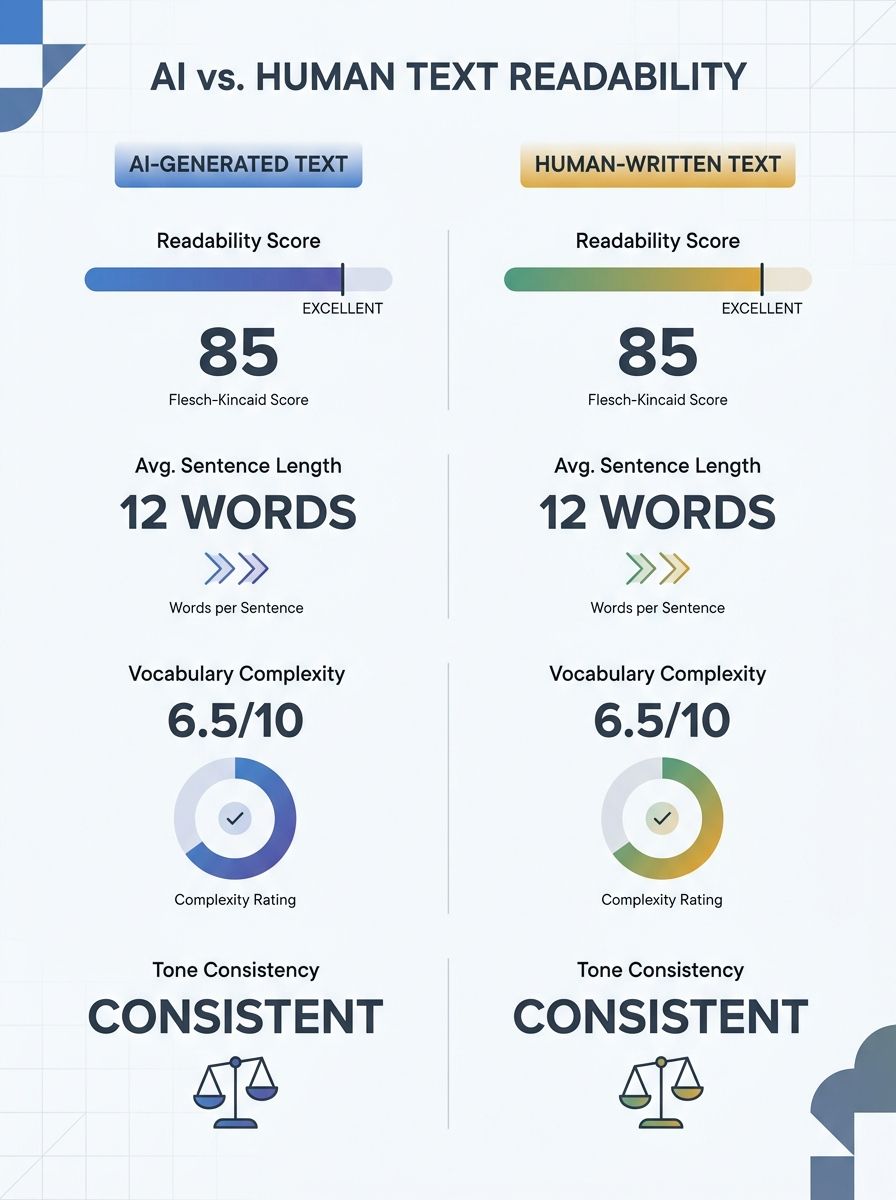
Readers shown AI-generated personal introductions performed at or near chance when identifying which text came from GPT-3, according to a study published in PNAS. Separate experiments across academic writing, marketing copy, and general-interest articles produced similar results, with participants u

Readers Perform at Chance Level Identifying AI-Generated Content, PNAS Study Finds
Readers shown AI-generated personal introductions performed at or near chance when identifying which text came from GPT-3, according to a study published in PNAS. Separate experiments across academic writing, marketing copy, and general-interest articles produced similar results, with participants unable to reliably distinguish AI-generated text from human-written content in controlled tests.
Surface-Level Quality vs. Genuine Insight
The indistinguishability finding measures specific textual attributes: grammar, fluency, structural coherence, and appropriate vocabulary for subject matter. Large language models now match or exceed the performance of human writers working under deadline pressure and quota constraints, particularly for commodity content formats including event recaps, explainers, how-to guides, and FAQ articles.
What controlled studies have not yet measured is whether writing contains insights that could only come from a particular person's experience or analytical framework—the kind of detail that does not exist in aggregate form anywhere on the internet. Reader preference studies that extend beyond initial impressions show human writing maintains a discernible edge in analysis, commentary, and long-form reporting requiring access to primary information.
A Nieman Lab contributor observed that AI has effectively commodified "good enough writing" while original reporting requiring genuine source access remains territory where human journalism holds its ground. The distinction matters because commodity content represents the majority of published output across most content operations.
Economic Disruption Framed as Quality Crisis
The content industry's reaction to the PNAS findings centers on alarm about quality degradation, but the underlying anxiety is economic rather than epistemic. Writers lose income when clients can produce comparable outputs at fraction of previous costs. Agencies lose clients who previously paid for scale-focused content production. Editorial positions disappear as organizations reassess staffing models.
The harm argument conflates two separate questions: whether AI content damages readers and whether AI content damages content creators' livelihoods. The available evidence does not convincingly demonstrate reader harm for the content types where AI deployment is currently most aggressive, according to the analysis. What AI content cannot replicate is work requiring source relationships, unpublished documents, on-the-ground observation, or interviews that change the story's direction—capabilities that require human presence and judgment.
The Scale-First Content Strategy Precedent
Content strategy over the past fifteen years has organized primarily around scale rather than depth or originality. The value proposition for most content operations—agency or in-house—centered on comprehensive coverage of topic spaces delivered at a pace that search algorithms would reward. The operative questions were "does this rank?", "does this convert?", and "does this answer the query well enough that the reader doesn't immediately leave?"
In this context, "can readers tell this was written by a human?" was never actually the operative standard. A large proportion of content produced by human writers over the past decade was not produced to be remarkable but to exist—to populate topic clusters and satisfy crawler requirements. The panic about AI content indistinguishability reflects concerns about AI doing efficiently what human content farms were doing inefficiently, a shift that carries real economic consequences but does not represent the existential crisis to quality it is frequently framed as.
This dynamic intersects with broader content production bottleneck issues where publishing timeline constraints already limited the depth human writers could achieve on deadline-driven assignments.
What This Means for Marketing Managers
Marketing managers running content operations built around keyword coverage and search volume should recognize that the indistinguishability finding validates what many already suspected: most commodity content produced at scale was optimized for crawlers rather than reader discernment. AI tools now deliver that output more efficiently, forcing a strategic choice between maintaining volume-focused approaches with AI assistance or pivoting toward content requiring genuine subject-matter expertise and primary research that AI cannot replicate.
The PNAS findings do not suggest AI content harms readers in measurable ways for the formats where it currently dominates—FAQ articles, product comparisons, how-to guides, and topical explainers. Organizations with documented content strategies, which already report 71% effectiveness rates compared to 38% for those without formal plans, should evaluate which portions of their content calendar require human insight versus which portions simply require reliable, grammatically correct coverage of known information.
The economic pressure is real, but the quality argument obscures rather than clarifies the actual decision point: whether your content operations need to produce what readers can find anywhere or what readers cannot find without your organization's specific knowledge and access. For most marketing departments, the honest answer is "both," which means the dual-engine visibility strategy of balancing AI-assisted commodity content with human-led original analysis becomes the operational framework rather than an either-or choice.

Sarah Chen
SEO strategist and web analytics expert with over 10 years of experience helping businesses improve their organic search visibility. Sarah covers keyword tracking, site audits, and data-driven growth strategies.
Related Articles

AI Content Production Guide Published Emphasizing Workflow Audit Over Tool Selection
TrySight.ai published a three-step framework on August 2, 2026, for scaling content operations with AI tools, positioning workflow auditing and strategic oversight ahead of technology implementation, according to the 2,400-word guide targeting marketing directors, solo founders, and agency teams.

Full Throttle SEO Warns Against Content Volume Approach for AI Search Optimization
Ivy Boyter, founder of Full Throttle SEO, cautioned businesses July 12 against producing high volumes of content to gain AI search visibility, arguing the strategy repeats content bloat and keyword cannibalization mistakes that damaged websites during the traditional SEO era, according to a statemen

HubSpot Data Shows 80% of Marketers Now Use AI for Content Creation as Automation Platforms Replace Manual Workflows
HubSpot's 2026 State of Marketing Report reveals that 80% of marketers now deploy AI tools for content and media creation, marking a fundamental shift from manual production to automated operational systems, according to a guide published June 29 by the marketing software company. The data underscor
Explore more topics