
The SEO Mistake Triage System: Diagnosing Root Causes Instead of Treating Symptoms
Automated SEO audit tools flag hundreds of issues per crawl but assign equal visual severity to missing alt text and accidental noindex tags on revenue pages.

The SEO Mistake Triage System: Diagnosing Root Causes Instead of Treating Symptoms
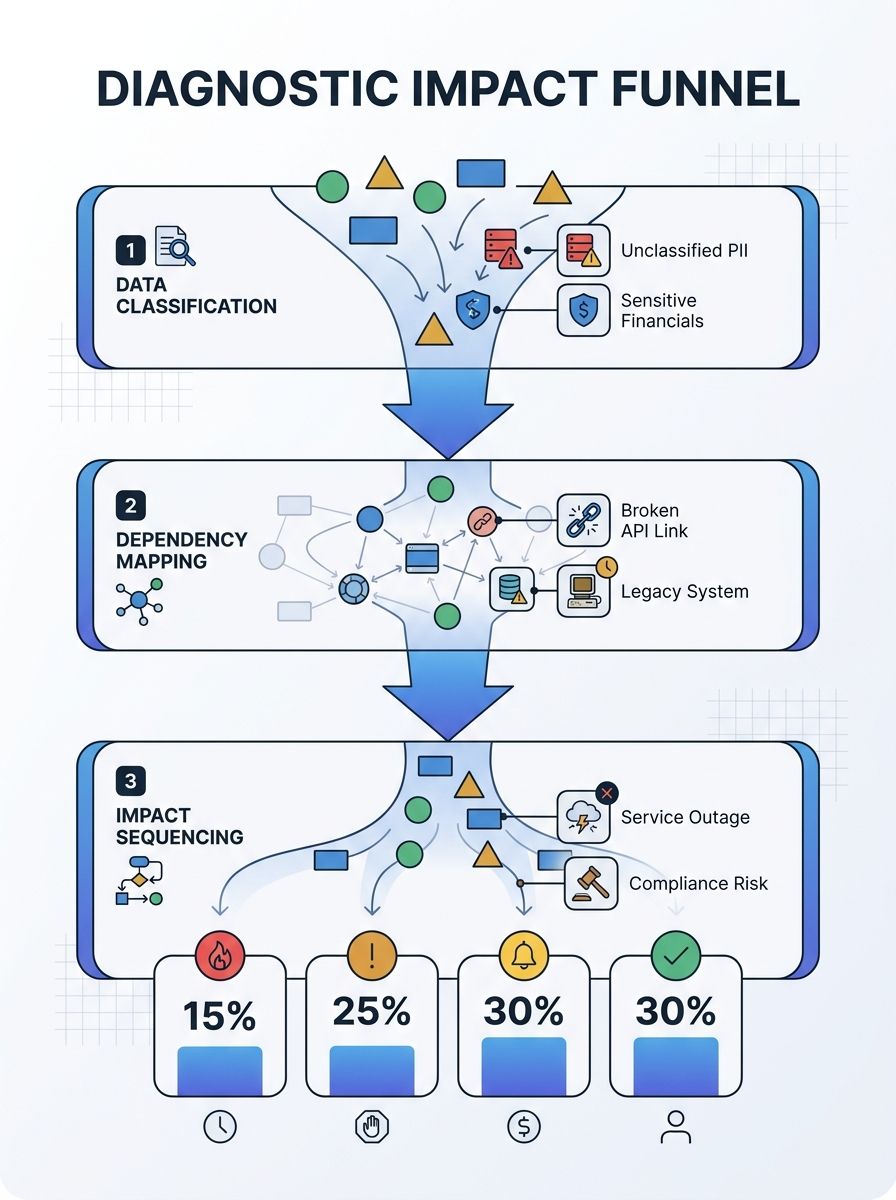
Automated SEO audit tools flag hundreds of issues per crawl but assign equal visual severity to missing alt text and accidental noindex tags on revenue pages. The triage system corrects this by routing every finding through three diagnostic layers — data classification, dependency mapping, and impact sequencing — before any fix enters a development sprint.
How Automated Audits Create the Wrong Fix Queue
Why do teams armed with the best crawling tools still misdiagnose traffic drops? Because the tools report what's broken, not what matters. A Screaming Frog crawl across 14,000 URLs returns 847 issues. Semrush flags 312 warnings. Google Search Console surfaces 94 indexing errors. The popular tools — Google Search Console, Screaming Frog, Semrush, Moz Pro, Lighthouse, and PageSpeed Insights — all present findings in flat lists sorted by count or severity labels that don't account for business context.
The result: 67% of in-house SEO teams cite lack of developer bandwidth as their top barrier to implementing fixes. When every sprint capacity conversation starts with "we have 847 errors," engineering managers push back, and SEO teams default to the path of least resistance. They fix 30 missing meta descriptions, close the ticket, and report progress. The accidental noindex tag sitting on a product category page generating $240,000 in monthly revenue stays untouched at line 614.
This is where a proper technical SEO audit framework diverges from a standard crawl report. The framework doesn't start with what's broken. It starts with what's declining.
The Diagnostic Fork: Impressions vs. Sessions
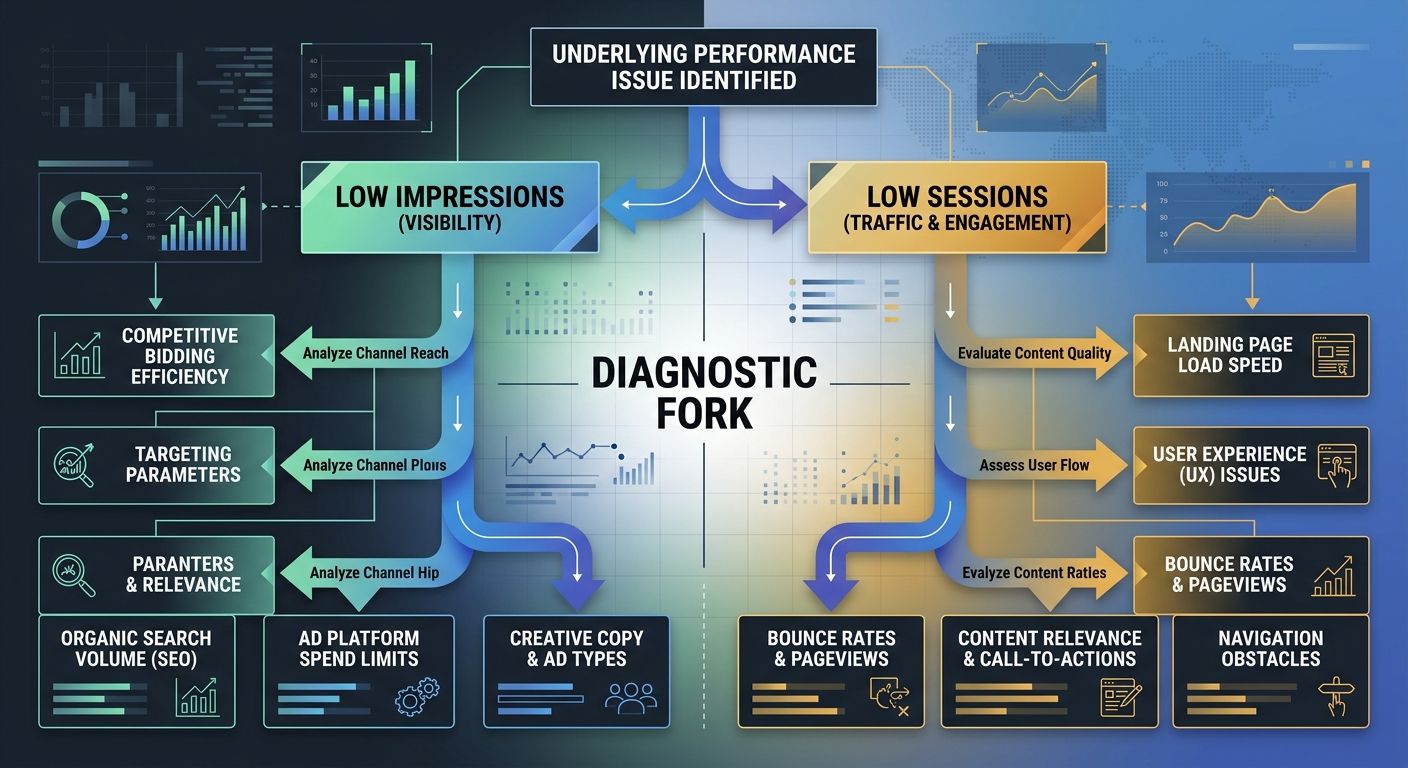
The first split in any traffic drop root cause analysis happens in Google Search Console, and it takes under three minutes. Pull impressions and sessions (or clicks) for the same date range. Two patterns emerge, and they point to completely different root causes.
When impressions hold steady but sessions decline, the problem is tracking, not visibility. A broken GA4 tag, a consent management platform blocking script execution for 40% of visitors, or a filter misconfiguration in your analytics property — these are measurement failures masquerading as traffic failures. I've seen teams spend 6 weeks rebuilding content strategy around a traffic "decline" that turned out to be a GTM container version that dropped the GA4 tag from 23% of page templates after a site redesign. The fix took 11 minutes.
When impressions drop, the issue lives in search visibility. The second fork splits by channel:
Organic search only declining: Algorithm changes, indexation problems, or the growing zero-click impact from AI-driven search features eating into click-through rates
All channels declining: Seasonal demand shift, brand perception change, or market-level contraction
Organic stable, paid declining: Budget exhaustion, auction competition, or landing page quality score degradation
This channel-isolation step eliminates roughly 60% of false hypotheses before any technical SEO audit framework even opens. SEO teams running structured benchmarking cadences catch these forks within days instead of discovering them during quarterly reviews.
Dependency Mapping Across the Fix Queue
After classifying where the decline originates, the triage system maps dependencies between fixes. This is the layer most teams skip, and it's the layer that makes everything else work.
SEO fixes follow a strict dependency chain: crawlability precedes indexation, indexation precedes ranking signal optimization, and ranking signal optimization precedes conversion work. A 6-step technical SEO audit framework sequences these as crawling, rendering, indexing, Core Web Vitals, schema, and structure — in that order. Violating this sequence wastes every downstream fix.
Consider a concrete example. A team identifies that 340 product pages have thin content scoring below 200 words. They spend 8 weeks expanding those pages to 800+ words with keyword-rich copy. Traffic doesn't improve. The reason: 280 of those 340 pages were blocked by a disallow rule in robots.txt inherited from a staging environment merge 7 months earlier. Googlebot never saw the originals. Googlebot never saw the rewrites. Eight weeks of content work delivered zero value because the crawlability dependency wasn't resolved first.
Dependency mapping also reveals which "quick wins" from automated audits are actually blocked wins. Fixing title tags on pages that return 5xx errors 30% of the time is wasted effort. Adding schema markup to pages excluded by canonical conflicts has no indexation path. The dependency map turns a flat list of 847 issues into a directed graph where fixing node A unlocks the value of fixing nodes B, C, and D.
How the Four Buckets Sort Actual Impact
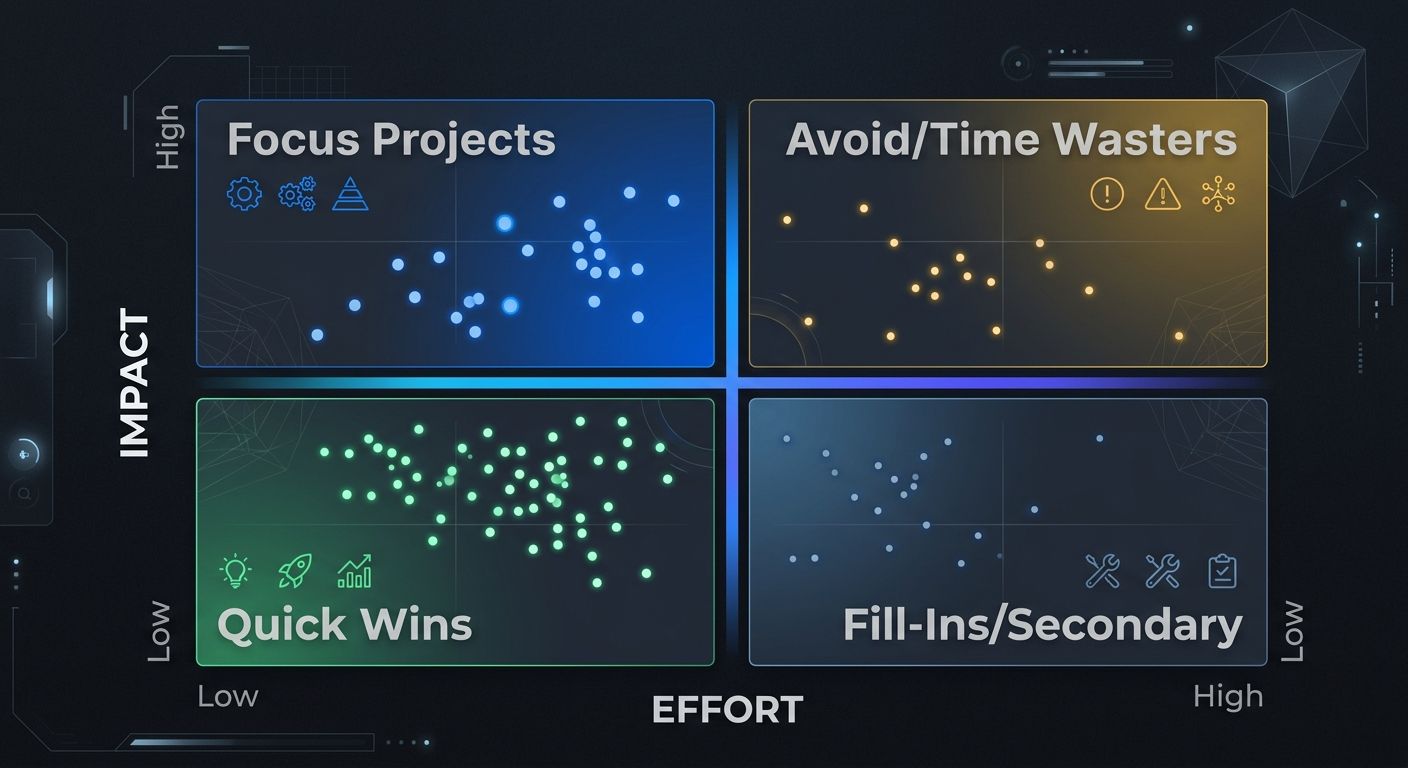
Once dependencies are mapped, every issue routes into one of four buckets based on impact and effort. This classification is what separates symptom treatment from root cause work.
Bucket | Impact | Effort | Examples | Typical Fix Time |
|---|---|---|---|---|
Fix Now | High | Low-Medium | Accidental noindex on production pages, 5xx errors on revenue URLs, expired SSL certificates, broken checkout flows | 1-3 days |
Fix Next | High | High | Core Web Vitals failures (LCP, CLS, INP), canonicalization conflicts across large page sets, mobile usability failures on key templates | 2-6 weeks |
Quick Wins | Lower | Low | Missing meta descriptions, image alt text gaps, minor redirect chains not blocking key journeys | Batch into sprints |
Backlog | Low | High | Orphaned posts from archived campaigns, text-to-HTML ratio cleanup, multiple H1 tag corrections | Deprioritize indefinitely |
The bucket classification exposes a critical pattern: teams working without triage spend 70-80% of their effort in the Quick Wins and Backlog rows while Fix Now items sit unresolved. Google's tightened LCP threshold to 2.0 seconds means only 33% of mobile sites currently pass Core Web Vitals — a Fix Next item that compounds across every page template but gets deferred because "it requires a dev sprint."
As Patrick Internet's analysis of technical SEO prioritization notes, the goal is to "prioritize immediate issues for quick wins, yet allocate resources for strategic, long-term improvements" — a dual approach that treats both symptoms and root causes, with root causes getting sequencing priority.
Keyword Stuffing Detection as a Diagnostic Signal
Keyword stuffing detection illustrates how the triage system transforms a surface-level finding into a root cause diagnosis. Google's algorithms identify keyword stuffing and penalize websites that use terms excessively, lowering search rankings and degrading user experience scores. But the stuffing itself is a symptom of one of three deeper failures.
Failure 1: Missing content strategy documentation. Teams without formal content guidelines default to density-based optimization because it's the only "rule" they know. Organizations with documented content strategies report 71% effectiveness rates compared to 38% among those without — and keyword stuffing almost never appears in documented programs because the strategy specifies intent targeting over density targeting.
Failure 2: Misaligned search intent. Pages built for informational queries get stuffed with transactional keywords because the team measured success by ranking position rather than conversion. The page ranks, but at the cost of readability and engagement signals. A proper search intent mismatch audit catches this before the stuffing begins.
Failure 3: Legacy content from pre-Panda optimization. Pages created before 2012 that were never audited still carry keyword densities of 5-8% — well above the 1-2% range modern algorithms tolerate. These pages may not be actively hurting performance, but if they're in the crawl path, they dilute the domain's overall content quality signals.
Praveen Gulia's analysis of root cause methodology for SEO describes this as a "systemic approach" that examines on-page optimization, site structure, and backlink profile as interconnected factors rather than isolated audit line items. Keyword stuffing detection, in this framework, is an entry point into content governance — not a standalone fix item.
External Signals the Triage System Can't Sequence
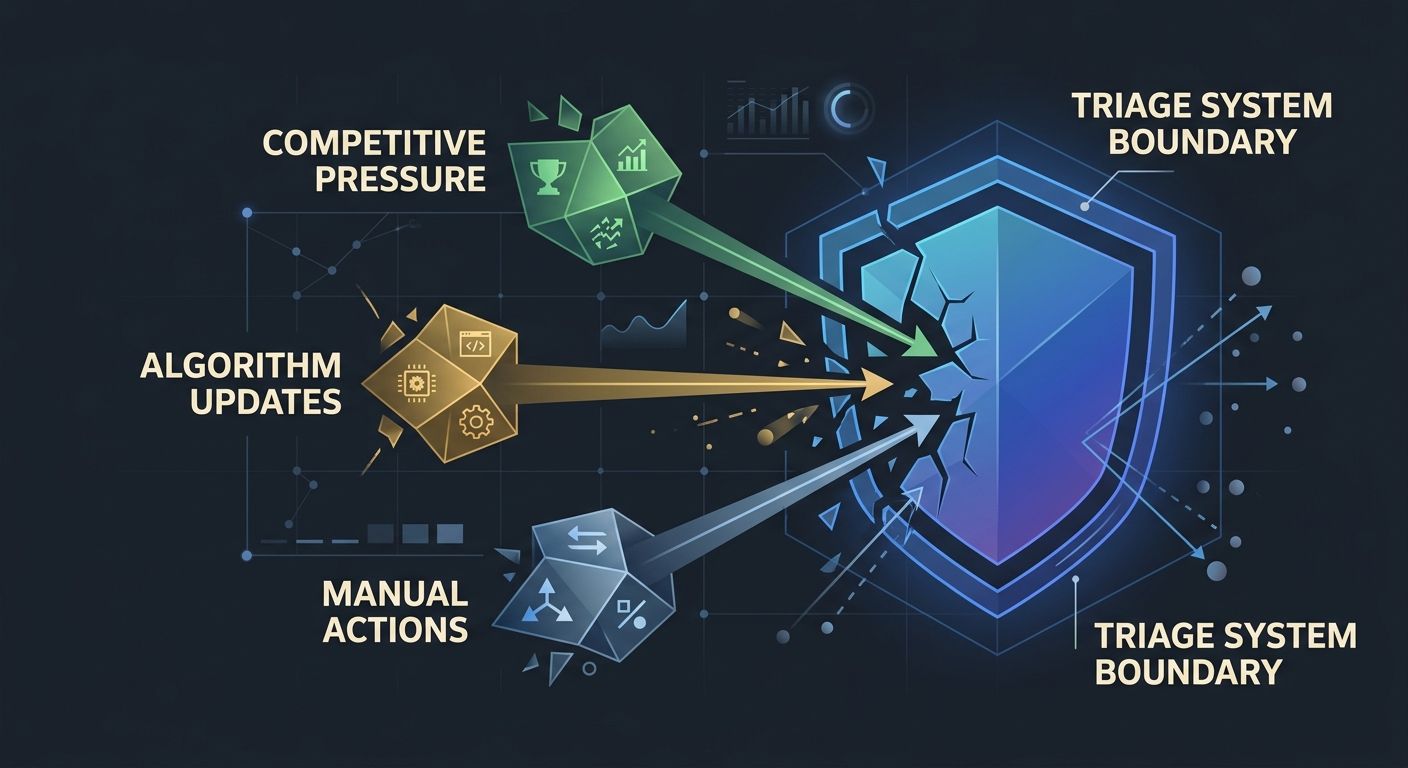
The three-layer triage model — classify, map dependencies, sequence by impact — handles the variables within your control. It breaks down at the boundary of external forces.
A rival's aggressive SEO, stronger content, or better user experience can draw traffic away even when your technical foundation is clean. Market changes like new entrants, industry consolidation, or shifting consumer preferences affect demand at a level no audit can fix. Google's March 2026 core update reshuffled 79.5% of top-three search positions in under two weeks, invalidating triage sequences that were mid-execution.
The model also struggles with cross-team coordination failures. When SEO identifies a Fix Now item but the engineering team's sprint is locked for 3 weeks, the dependency chain stalls. The 67% developer bandwidth gap cited earlier isn't a triage design problem — it's an organizational problem that the triage system makes visible but can't solve alone.
And the most honest limitation: if your site has been hacked, flagged for spammy links, or manually reviewed for deceptive behavior, organic traffic can drop overnight in ways that bypass every diagnostic layer. Manual actions require their own escalation path — Google Search Console's Security & Manual Actions panel — and they override the triage system entirely.
The triage system's value lives in the 70-80% of traffic decline scenarios caused by internal technical and content failures. For those cases, it converts an overwhelming audit report into a sequenced, dependency-aware action plan that spends developer hours where they produce measurable recovery. For the remaining 20-30% driven by external forces, the system's diagnostic fork at least rules out internal causes quickly — saving teams from rebuilding page templates when the real problem is a market shift they can't engineer their way out of.

Sarah Chen
SEO strategist and web analytics expert with over 10 years of experience helping businesses improve their organic search visibility. Sarah covers keyword tracking, site audits, and data-driven growth strategies.
Related Articles
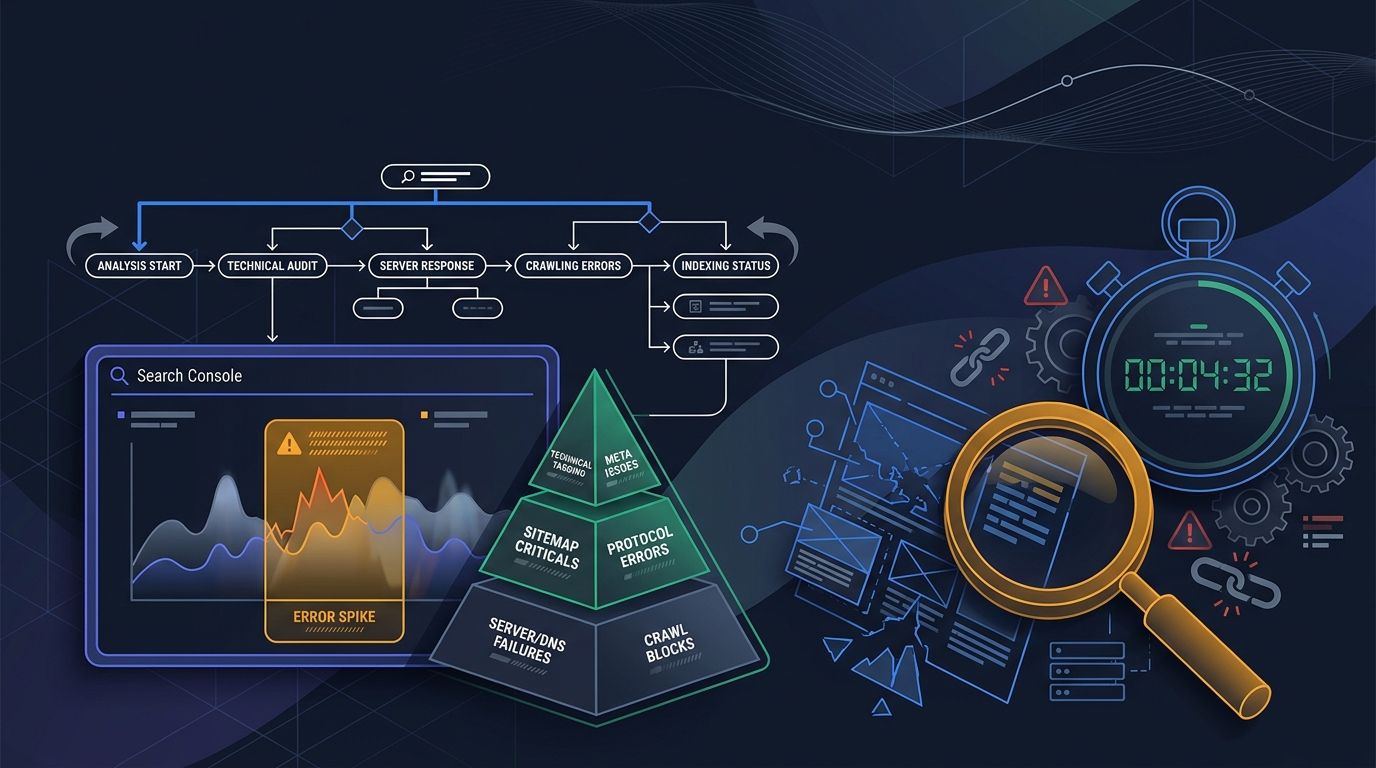
The SEO Triage Protocol: Prioritizing Technical Fixes When Everything Is Broken
Fixing technical SEO issues in the order your audit tool ranks them guarantees the slowest possible recovery. Automated severity scores ignore your traffic patterns, your social promotion calendar, and which pages generate revenue.
The Technical SEO Triage Framework: When Your Site Has Multiple Issues, What to Fix First
Canonical tag errors across a single page template can cascade into 8,000 indexing failures, yet standard audit tools flag each duplicate URL as a separate issue with identical severity. The fix order matters more than the fix count.
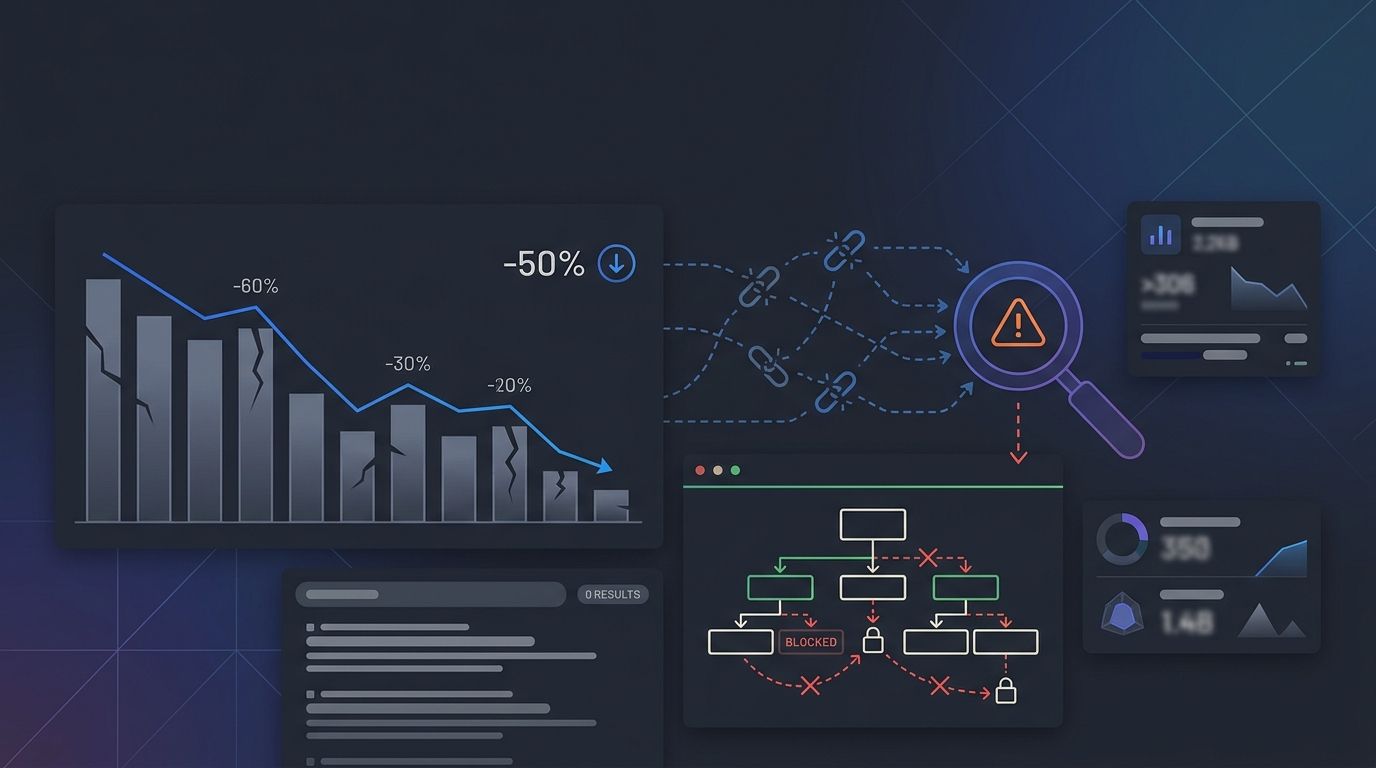
8 SEO Mistakes to Avoid That Tank Your Website Traffic
Traffic drops from SEO mistakes share a single underlying mechanism: each failure breaks a specific step in the pipeline Google uses to crawl, evaluate, rank, and serve your pages to users ready to convert.
Explore more topics