
Site Architecture for SEO: How to Structure Your Website for Maximum Rankings
PageRank flows downhill through your site's link graph, losing equity at every click away from the homepage.

Site Architecture for SEO: How to Structure Your Website for Maximum Rankings
PageRank flows downhill through your site's link graph, losing equity at every click away from the homepage. This mechanical fact explains why site architecture decisions routinely outweigh individual page optimizations for competitive queries, and why restructuring a site's hierarchy can produce triple-digit traffic gains without publishing new content.
Depth Controls Crawl Priority Before Content Quality Enters the Picture
Why does a well-written article sitting five clicks deep consistently underperform a mediocre page two clicks from the root? Because Googlebot allocates crawl budget based on structural proximity, and pages reachable within three clicks from the homepage receive dramatically more crawl attention than anything buried deeper. For sites exceeding 10,000 URLs, this crawl budget allocation becomes the primary bottleneck. As Lumar's site architecture research states, architecture "fundamentally affects how search engines are able to crawl a website — and how users are able to navigate it in order to convert." If your most valuable commercial pages live at click depth four or five, Googlebot may discover them days or weeks after publication, and they'll accumulate less PageRank with every additional click separating them from your homepage.
I've worked with enterprise sites where moving product category pages from depth four to depth two produced 40–60% increases in indexed pages within a single crawl cycle. The content on those pages didn't change. The titles didn't change. The only variable was structural position. This is where the distinction between site architecture and content optimization becomes concrete: you can write the best page on the internet, but if your URL structure buries it behind three layers of unnecessary subdirectories, Google will treat it as low priority. Google's Search Central documentation is explicit on this point, warning developers to "avoid long ID numbers, fragments, and underscores" and noting that "complex URLs, excessive parameters, session IDs, and dynamic calendars can create indexing problems." Clean, shallow URLs are a crawl efficiency requirement, not a cosmetic preference.
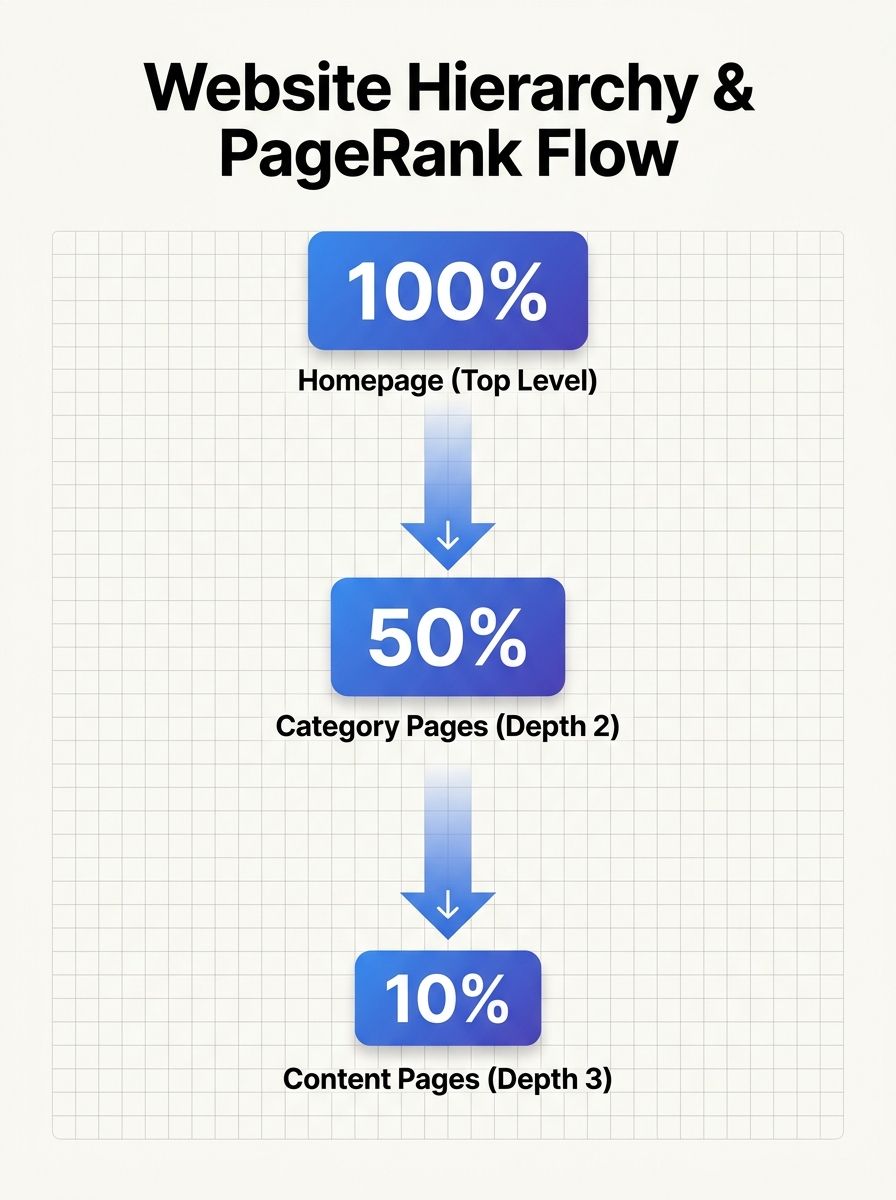
The flatness principle extends to navigation design. Breadcrumb navigation and user-centric menus serve a dual function: they reduce effective click depth for users while giving search engines explicit signals about page relationships. A page that appears five levels deep in your URL structure but is accessible in two clicks through main navigation inherits the crawl benefits of a depth-two page. Breadcrumbs also generate structured data that Google can parse for hierarchy signals, which feeds directly into how your site appears in search results. For sites with large content libraries, this navigation layer often matters more than the URL path itself.
Topic Clusters Turn Loose Content Into Authority Signals
The cluster model works because Google's ranking system evaluates topical authority at the domain and subdirectory level, not page by page. A pillar page on "content marketing" that links to 12 specific subtopic pages, each linking back to the pillar and to each other, creates a closed internal link graph that concentrates authority signals around a single theme. As Search Engine Land's architecture guide puts it, "the stronger your structural signals, the stronger your perceived authority across the topic." This mechanism explains why a focused 50-page site with tight clustering can outrank a 5,000-page site where content exists in unconnected silos.
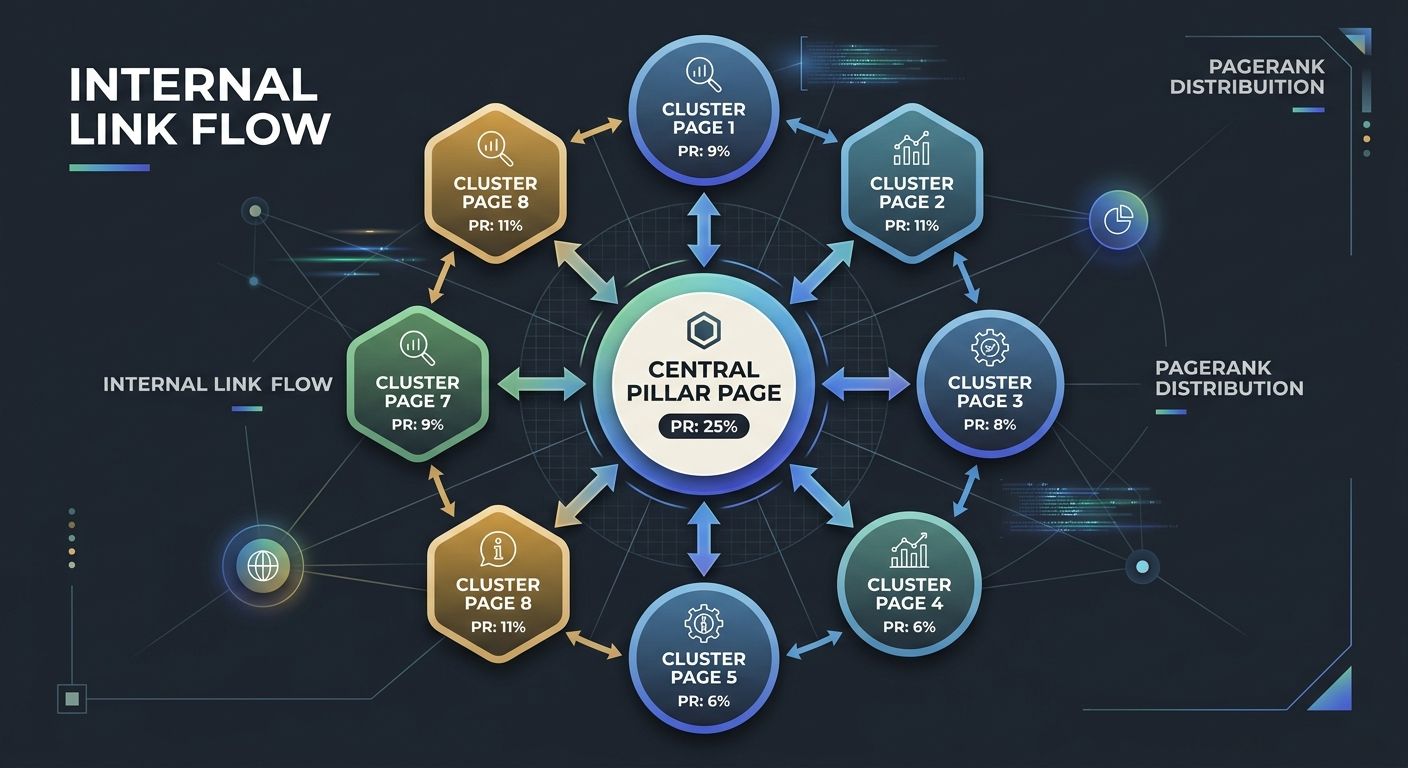
The implementation details matter enormously. Semrush's internal linking research recommends at least two or three internal links pointing to every new piece of content, with anchor text that uses "strategic words and phrases so users and search engines understand the linked page's topic." Every page you publish should connect to at least two existing pages within its topic cluster, and the anchor text should describe the destination page's subject rather than using generic phrases like "click here" or "learn more." Backlinko's guide adds precision to placement, recommending that the first internal link appear within the first section of the page rather than in the introduction, because links higher on a page pass more authority. If you're building content architecture around topic clusters, link placement within each page is as important as the cluster structure itself.
Subfolders reinforce cluster signals in ways that subdomains cannot. A URL structure of domain.com/seo/keyword-research/ tells Google that the keyword research page belongs to the SEO topic group. That same page at seo.domain.com/keyword-research/ sits on a separate subdomain, which Google may treat as a distinct property for link equity purposes. The subfolder approach consolidates all PageRank under a single domain, so authority earned by any page benefits the entire site. Semrush's own blog demonstrates this in practice, organizing content under categories like "SEO," "Marketing," and "News & Research," with subcategories like "Keyword Research" and "On-Page SEO" grouping related content within the same URL path. This architecture decision mirrors how Google evaluates topical authority at the subdirectory level.
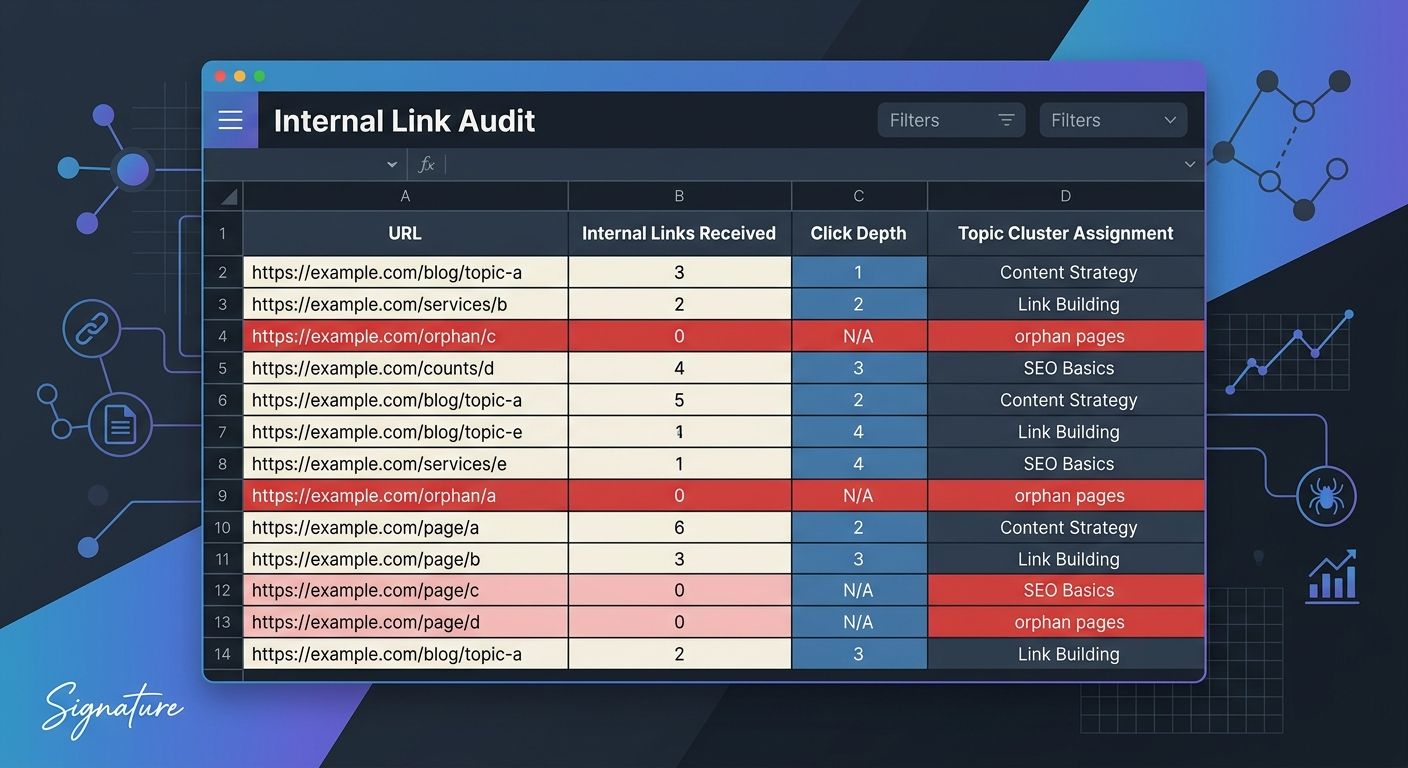
The orphan page problem sits at the opposite end of this spectrum. Pages with zero internal links pointing to them receive no link equity from the rest of your site and minimal crawl attention. Regular audits of your internal link structure should identify these disconnected pages and either integrate them into a relevant cluster or remove them from your index entirely. A full site audit I ran for a B2B SaaS company found that 23% of their published blog posts were functionally orphaned, with zero internal links from anywhere on the domain. Those 340+ pages were consuming crawl budget without contributing to any topical authority signal. Reconnecting them into the appropriate clusters and pruning the truly irrelevant ones freed up crawl budget and improved indexation rates for the remaining pages within six weeks.
Why Going Over the Top With URL Complexity Destroys Rankings
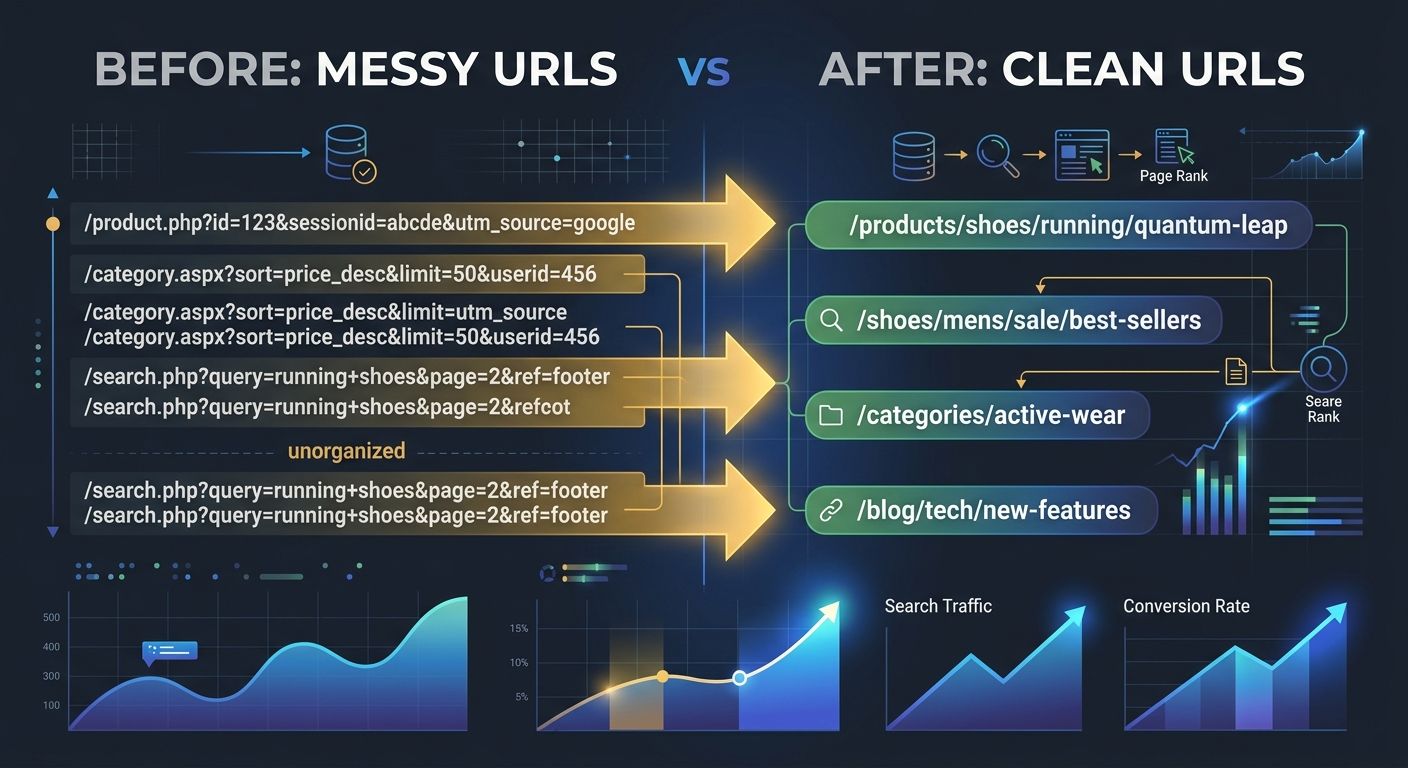
URL structure functions as a readable signal for both humans and crawlers, and optimized URL structures directly promote PageRank by helping Google assess page relevance to search queries. The principle is simple: a URL should describe its content in a few lowercase, hyphen-separated words that reflect the page's position within your site hierarchy. The path domain.com/marketing/email-campaigns/ communicates more structural information in 40 characters than domain.com/p?cat=3&id=4892&ref=sidebar communicates in any number of characters.
Going over the top with parameters, tracking codes, and session IDs creates a URL explosion that fragments crawl budget across thousands of variations of the same page. E-commerce sites are particularly vulnerable: a product listing page with filters for size, color, price, and availability can generate hundreds of unique URLs that all display the same or similar content. Each of those URLs competes for crawl attention, dilutes internal link equity, and risks creating duplicate content signals that confuse Google's indexing decisions. The fix requires canonical tags pointing all parameter variations to a single preferred URL, combined with robots.txt directives that prevent Googlebot from crawling the parameter variants in the first place. For most sites, the combination of canonical tags and an XML sitemap strategy that includes only canonical URLs handles 90% of URL complexity issues.
Yoast's internal linking research confirms the downstream effects, noting that "a strong internal linking strategy enhances user engagement, reduces bounce rates, and increases the visibility of key pages." But that strategy falls apart when your URL structure generates so many page variants that internal links point to non-canonical versions. I've seen sites where 15–20% of internal links pointed to URLs with unnecessary parameters, effectively leaking PageRank to pages that Google would never index. The fix involved consolidating over 4,000 parameter URLs into 600 canonical pages and redirecting all internal links to the clean versions. Organic traffic to the affected category pages increased by 85% within eight weeks, entirely from structural changes. Understanding how poor site structure undermines your linking strategy is essential before you invest in new content production.
Where Architecture Planning Hits Its Limits
Site architecture is the most underinvested area of SEO strategy, and the one with the clearest mechanical relationship to rankings. The principles themselves aren't controversial: flat hierarchy, clean URLs, topic clustering, strategic internal linking, subfolder organization. The evidence supporting each is well documented across Google's own documentation, Search Engine Land, Lumar, and thousands of enterprise case studies. Getting the structural foundation right before pouring resources into content production is, in my experience, the highest-ROI work an SEO team can do.
But here's what the best-practices guides rarely acknowledge: sites don't stay architecturally clean. Every new product launch, every marketing campaign with tracking parameters, every content team publishing outside the established cluster model introduces structural debt. A site that scores perfectly on an architecture audit in January can develop orphan pages, URL bloat, and broken internal link chains by June. The real question for most organizations isn't how to structure your website correctly once, but how to maintain structural integrity as the site scales. That maintenance requires ongoing audits, clear publishing guidelines that specify URL conventions and internal linking requirements, and someone with the authority to enforce those standards when a product team wants to spin up a new subdomain for a campaign landing page. The sites that achieve maximum rankings over sustained periods are the ones that treat structural governance with the same rigor they apply to content calendars and keyword tracking. Whether your existing architecture signals topical authority or quietly works against you depends as much on maintenance discipline as on initial design, and that ongoing tension between architectural ideals and operational reality is the part no audit checklist can fully solve.

Sarah Chen
SEO strategist and web analytics expert with over 10 years of experience helping businesses improve their organic search visibility. Sarah covers keyword tracking, site audits, and data-driven growth strategies.
Related Articles
SEO Guide: Site Architecture & Search Engine Success Factors
Every URL on your site carries three architectural signals that determine its search visibility: click depth from the homepage, subfolder grouping within a topic cluster, and internal link connectivity to related pages.

Site Architecture for SEO: Structure That Ranks & Scales
Restructuring site architecture has produced up to 175% increases in traffic and conversions in documented cases.

The Link Equity Flow Audit: Mapping How Authority Moves Through Your Site Architecture
The top 10% of pages on a typical enterprise site absorb more than 80% of all internal links, according to Digital Strategy Force's 2026 audit data, leaving the remaining pages starved of the authority they need to rank.
Explore more topics