
Beyond Crawlability: Why Google Understands Your Pages But Refuses to Rank Them in 2026
Crawlability has been a solved problem on most commercial websites for years, and yet Google's March 2026 core update still hit 55% of tracked sites with traffic drops averaging 20 to 35 percent. The pages affected were already indexed, already rendering, already discoverable.

Beyond Crawlability: Why Google Understands Your Pages But Refuses to Rank Them
Crawlability has been a solved problem on most commercial websites for years, and yet Google's March 2026 core update still hit 55% of tracked sites with traffic drops averaging 20 to 35 percent. The pages affected were already indexed, already rendering, already discoverable. The ranking bottleneck has moved decisively past technical access and into content quality signals, topical authority, and E-E-A-T implementation.
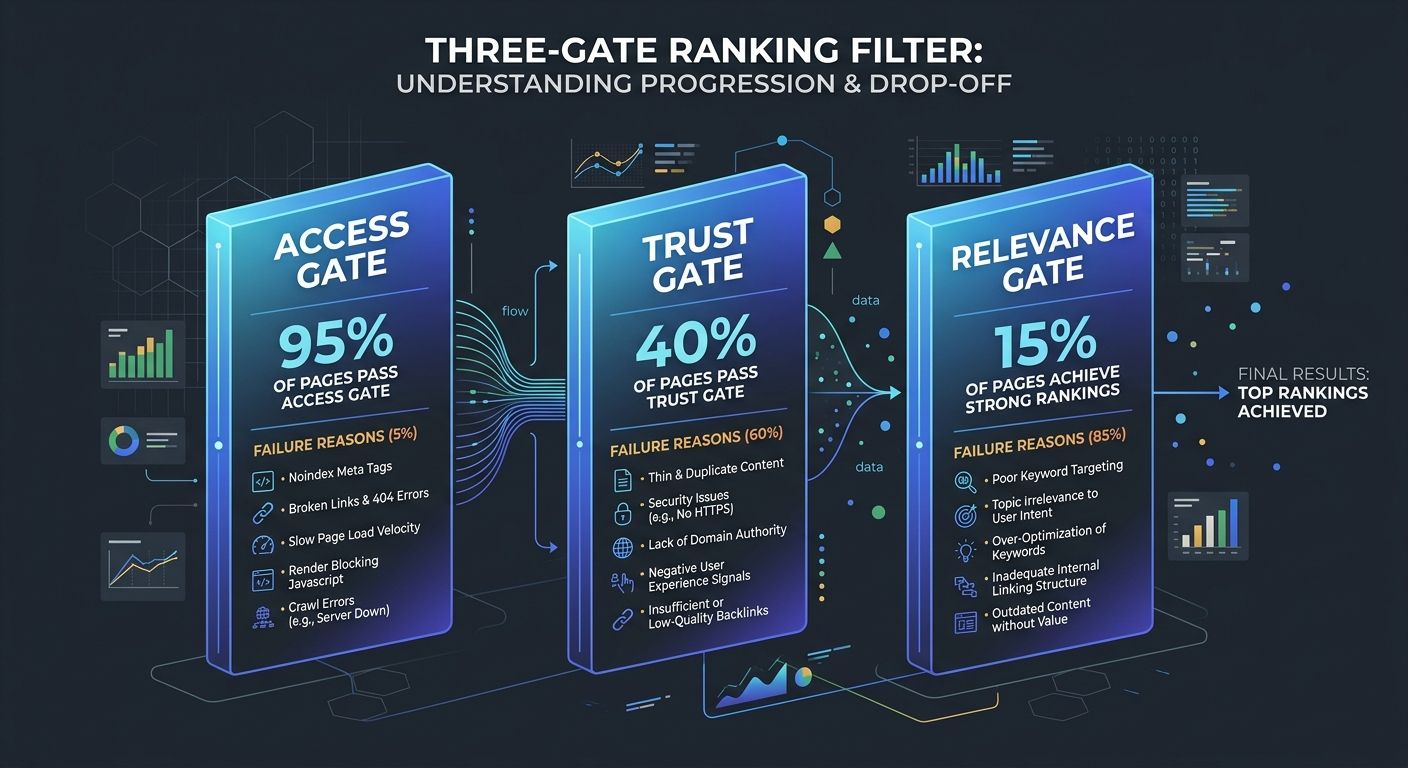
I call this the Three-Gate Ranking Filter. Every page your site publishes passes through an Access Gate (crawlability and indexation), a Trust Gate (E-E-A-T and quality signals), and a Relevance Gate (topical authority and intent alignment). The overwhelming majority of ranking failures in 2026 happen at Gates Two and Three, while site owners keep auditing Gate One.
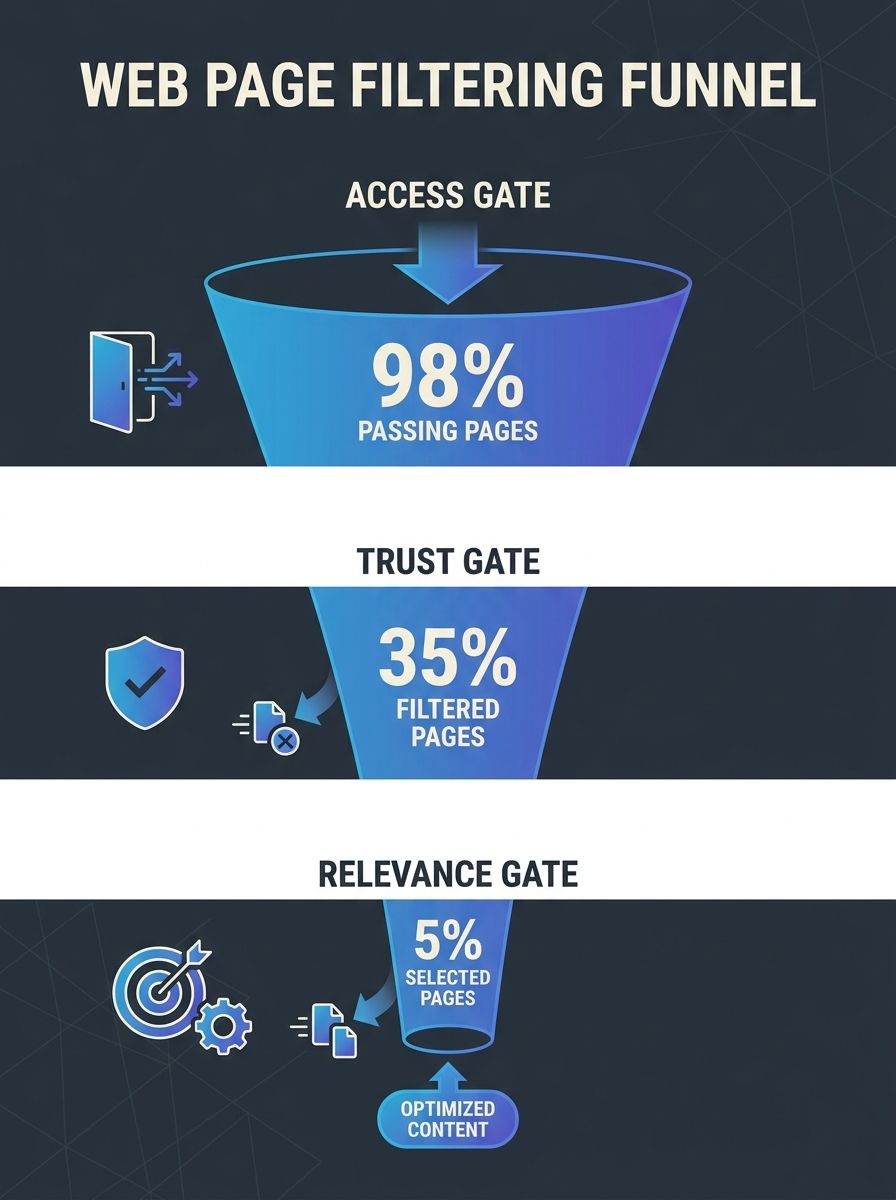
The March 2026 Core Update Targeted Quality, Not Access
Google's March 2026 core update was the most aggressive quality-system change since the Helpful Content Update of 2022. According to ClickRank's 2026 ranking factors analysis, "content is still king, but quality systems decide which content counts." That distinction is the whole story. Google's crawlers still visit your pages on schedule. The indexer still processes your markup. And then the quality systems throw everything out.
The update specifically targeted scaled content abuse. Sites relying on mass-produced, template-driven pages, many of them raw AI-generated output, saw the steepest declines. The pattern was consistent: pages that passed every technical SEO audit available still lost 20 to 35 percent of their organic traffic because Google's quality classifiers flagged them as low-value.
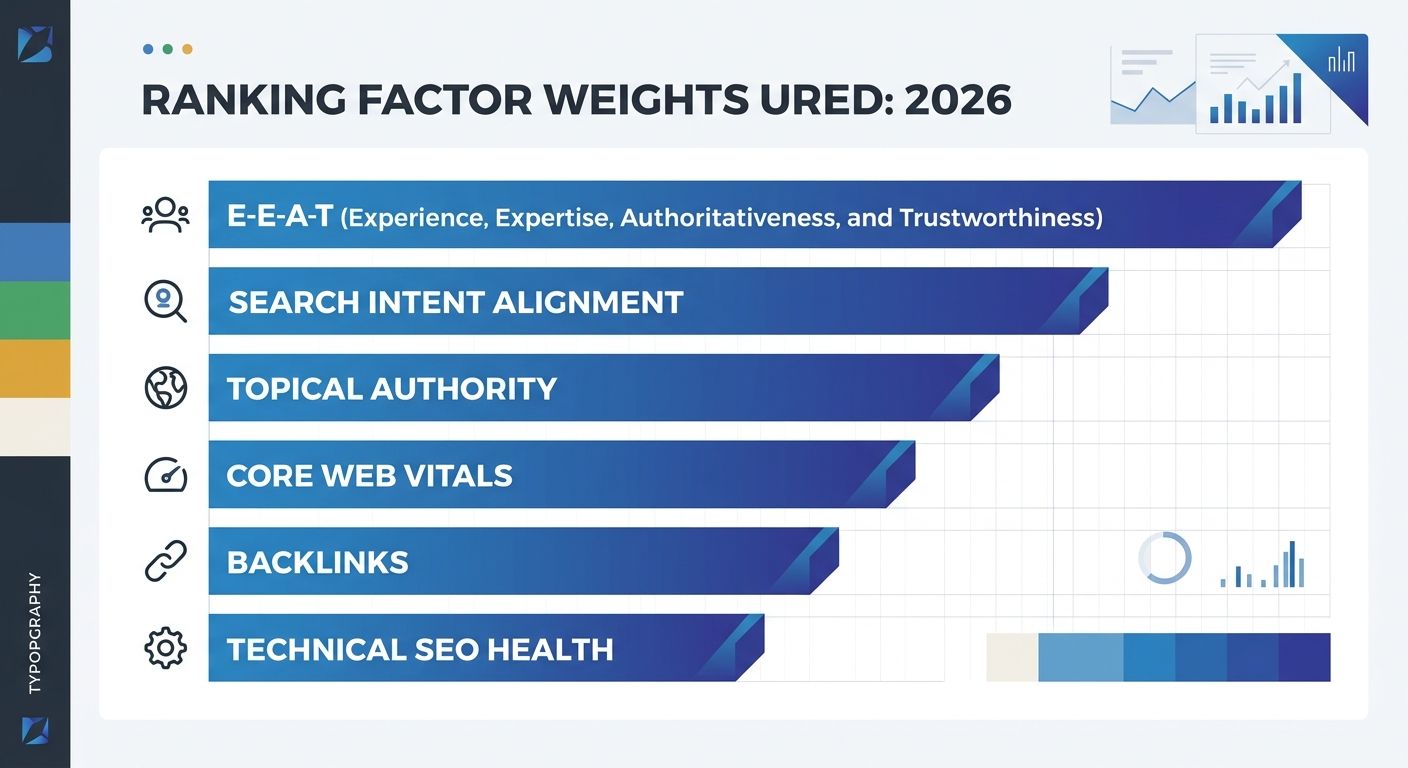
This aligns with what BeardyNerd's 2026 analysis identifies as the top Google ranking factors 2026: E-E-A-T, search intent alignment, topical authority, Core Web Vitals, quality backlinks, and technical SEO health, in roughly that priority order. Notice where technical SEO sits. It's the floor, not the ceiling.
If you've been running your standard crawl audit and wondering why cleaned-up technical SEO gaps haven't moved your rankings, this is why. The bottleneck shifted while the audit checklist stayed the same. We've written extensively about how the crawlability-to-rankings gap works, and the core point holds: being crawlable is a prerequisite, not a strategy.
Topical Authority Has Become the Gate Google Actually Guards
Why does a 3,000-word article on a topic you clearly understand sit at position 47 while a competitor's 1,200-word piece ranks in the top five? The answer, in almost every case I've investigated over the past 18 months, comes down to topical authority. Google doesn't evaluate individual pages in isolation. It evaluates whether your entire site demonstrates sustained, interconnected expertise on the subject.
As The HOTH's E-E-A-T research describes it, ranking well requires "the powerful one-two punch of demonstrating E-E-A-T to build topical authority." E-E-A-T without topical coverage means you have credible authors writing about topics your site hasn't earned the right to rank for. Topical coverage without E-E-A-T means you've published extensively on a subject, but Google's quality systems don't trust any of it.
The practical E-E-A-T implementation that moves rankings involves three structural commitments:
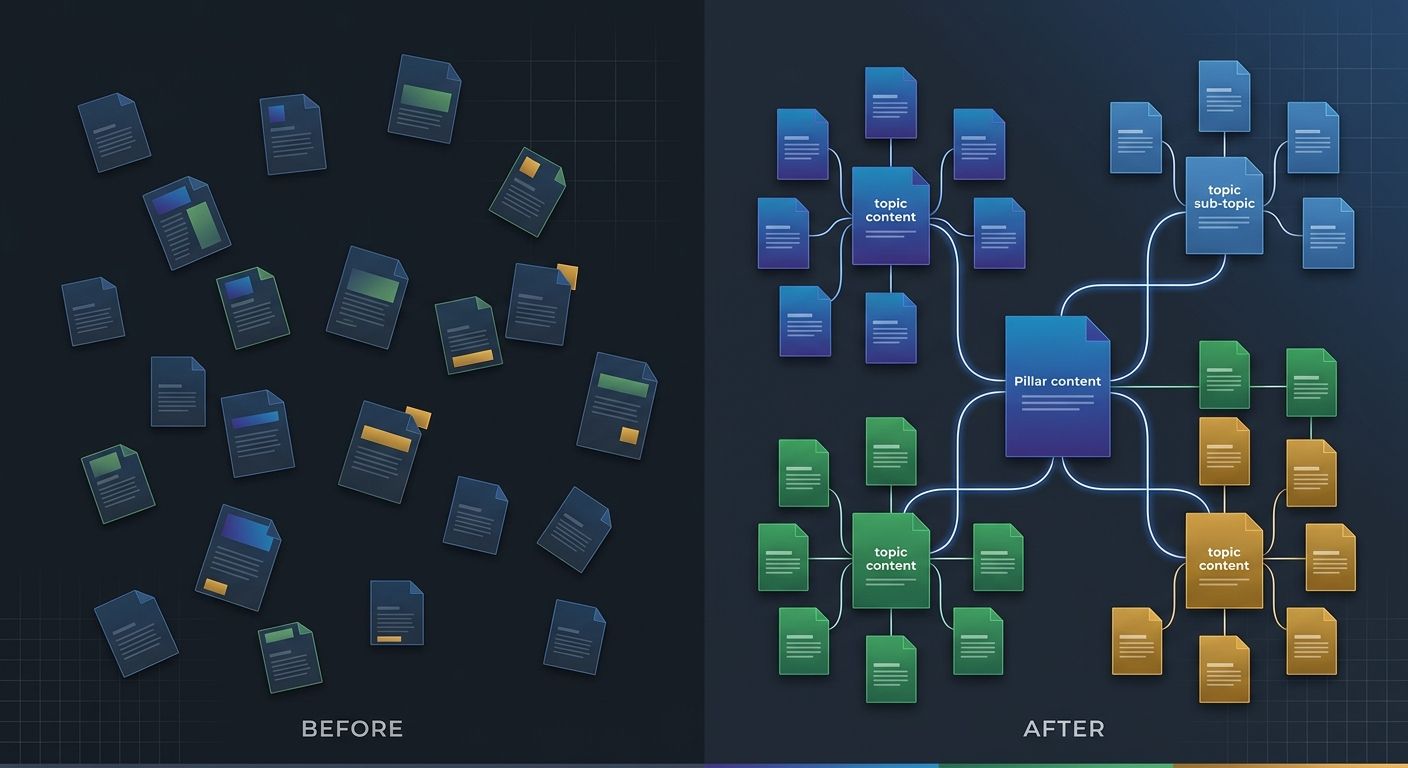
Content clusters with genuine internal depth. Your site architecture needs to signal topic relationships through internal links, not just through keyword targeting. Google's systems look at how your pages connect to each other around a subject. Isolated pages, no matter how well-written, get treated as shallow signals.
Author credentialing that's machine-readable. Structured author bios with verifiable credentials, linked social profiles, and published work history give Google's E-E-A-T classifiers something to evaluate. A byline with just a name and a headshot does almost nothing.
First-party experience signals. The first "E" in E-E-A-T (Experience) has become the hardest to fake and the most valuable to demonstrate. Original data, case-specific analysis, screenshots of actual results, methodology descriptions: these are the content quality signals that separate pages Google will rank from pages Google simply indexes and ignores.
Backlinko's analysis of Google's ranking factors confirms a clear correlation between depth of topic coverage and rank. Pages that cover a topic in depth, supported by related content across the site, consistently outrank thinner pages from sites without that surrounding context. The mechanism is straightforward: depth of coverage serves as a proxy signal for expertise.
I worked with an enterprise client whose blog published 400+ articles across a dozen unrelated topics. Every page was technically clean. Crawlability was perfect. Rankings were mediocre across the board. When we pruned 60% of those articles and reorganized the remainder into six tight topical clusters with proper schema markup signaling topic relationships, average position improved by 14 spots within two indexing cycles. The content that survived was the same content. The structure around it changed everything.
Search Intent Misalignment Kills Indexed Pages Silently
The third gate is the one that frustrates site owners most, because it's invisible in standard reporting. Your page is indexed. Your domain has authority. Your E-E-A-T signals check out. And Google still won't rank it because the page answers a question nobody is asking, or answers the right question in the wrong format.
Search Engine Land's SEO debugging guide captures the common blind spot well: "some SEOs waste weeks chasing ranking problems, when the real issue is that Google can't even crawl their pages properly." That was true in 2020. In 2026, the reverse is more common. SEOs waste weeks chasing crawl problems when the real issue is that Google can crawl the page fine but the page doesn't match what users actually want from that query.
Google's systems evaluate search intent alignment across four dimensions: format (does the user want a list, a video, a comparison table, or a narrative?), depth (are they looking for a quick definition or a thorough guide?), freshness (do they expect current information or evergreen reference?), and commercial intent (are they researching or ready to buy?). Misaligning on any single dimension can suppress a page that scores well on every other Google ranking factor.
The fix requires something most SEO workflows skip: intent auditing before content creation. Look at what currently ranks for your target query. Count how many results are lists versus how-to guides versus product pages. Note whether Google shows AI Overviews, featured snippets, video carousels, or People Also Ask boxes. These SERP features are Google telling you exactly what format it believes users want. Your content needs to match or improve on that format, otherwise the quality of your writing is irrelevant. We've outlined how to audit for search intent mismatches across large page sets, and the process catches failures that no technical crawl report will surface.
With AI Overviews now triggering on 48% of Google searches and zero-click rates hitting 83% on those queries, the intent alignment bar is even higher. Google is synthesizing answers directly from pages it deems most trustworthy and most precisely matched to the query. If your page provides broad coverage rather than direct, extractable answers to specific questions, Google's AI systems will pull from competitors who do.
Where This Leaves the Technical SEO Playbook
The contrarian claim at the top of this article wasn't that technical SEO is dead. It was that technical SEO gaps are no longer the primary reason Google refuses to rank pages it can already access and understand. The evidence from the March 2026 core update, from topical authority research, and from intent alignment data all point in the same direction: the ranking system's quality filters operate independently of, and after, the crawl-and-index pipeline.
The technical foundation still matters. Core Web Vitals still influence ranking. Proper canonical tags prevent duplicate-content dilution. Clean site architecture ensures link equity flows correctly to your most important pages. These are table stakes, the Access Gate that your pages must pass through before the harder evaluation begins.
But if you're spending 80% of your SEO budget on technical audits and 20% on content quality, E-E-A-T implementation, topical depth, and intent research, you've got the ratio backwards. The sites winning in 2026 have flipped those numbers. They treat crawlability as maintenance and treat trust, authority, and relevance as the actual competitive battleground.
The Three-Gate Ranking Filter gives you a diagnostic sequence. When a page fails to rank, ask three questions in order: Can Google access it? Does Google trust it? Does Google believe it answers the query better than alternatives? If the answer to the first question is yes (and for most sites, it is), stop debugging your robots.txt and start debugging your authority, your depth, and your alignment with what users actually need. That's where the ranking problem lives, and that's where the fix has to happen.
Sarah Chen is a Senior SEO Strategist & Analytics Consultant with 10+ years of enterprise SEO experience. She holds Google Analytics IQ and Google Search Console certifications.

Sarah Chen
SEO strategist and web analytics expert with over 10 years of experience helping businesses improve their organic search visibility. Sarah covers keyword tracking, site audits, and data-driven growth strategies.
Related Articles
8 SEO Mistakes to Avoid That Tank Your Website Traffic
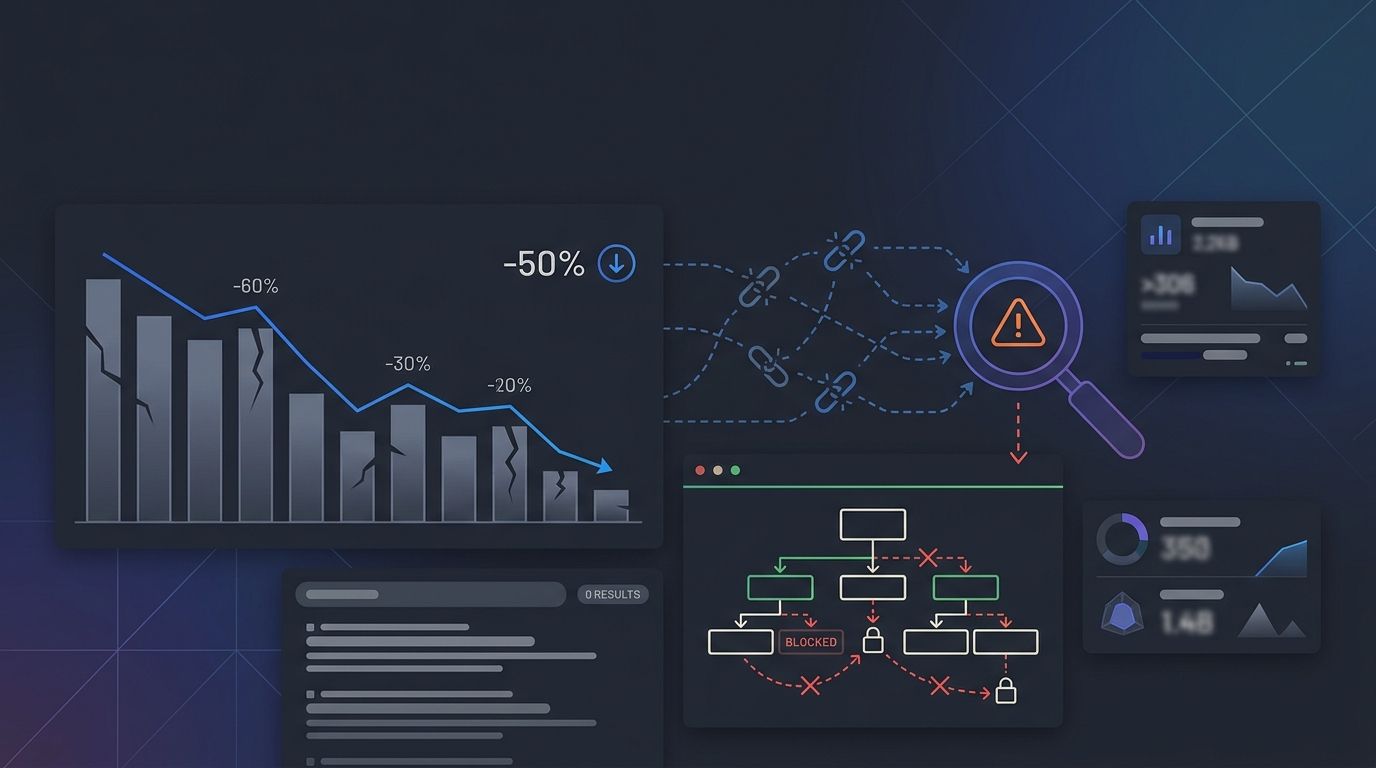
Traffic drops from SEO mistakes share a single underlying mechanism: each failure breaks a specific step in the pipeline Google uses to crawl, evaluate, rank, and serve your pages to users ready to convert.
The Search Intent Mismatch Audit: Why Your Content Ranks but Doesn't Convert
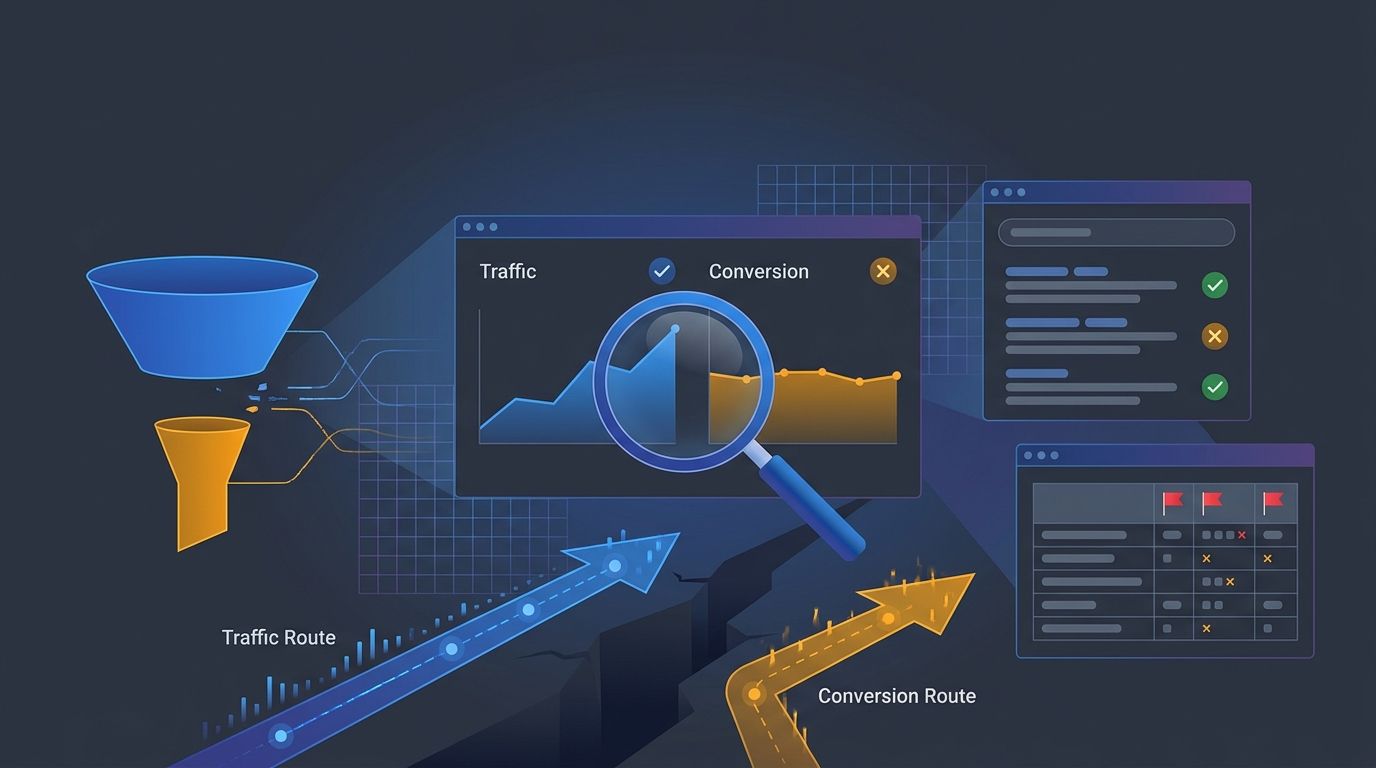
Pages that rank on page one but convert below 1% don't have a CRO problem. They have a content classification problem, where the page answers the wrong type of question for the person searching.
The Crawlability-to-Rankings Gap: Why Google Understands Your Pages But Won't Rank Them
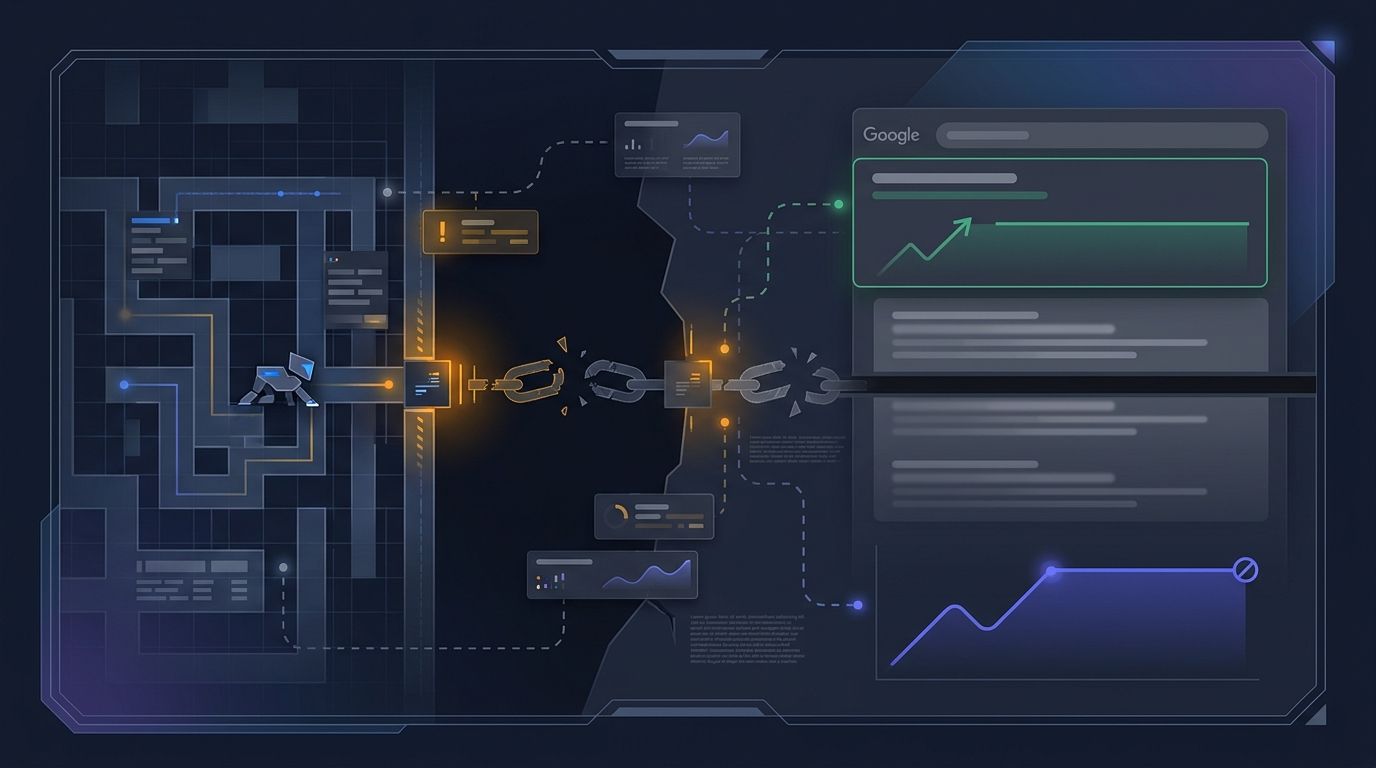
Google Search Console's page indexing report marks a URL as "Submitted and indexed," and most site owners interpret that green status as mission accomplished.
Explore more topics