
Top Rank Tracking Software Compared: Which Tool Wins in 2026?
I spent three weeks migrating our agency's keyword tracking from one platform to another and discovered something uncomfortable: the rankings we'd been reporting to clients for months were off by an average of 4.3 positions.
Top Rank Tracking Software Compared: Which Tool Actually Wins in 2026?
I spent three weeks migrating our agency's keyword tracking from one platform to another and discovered something uncomfortable: the rankings we'd been reporting to clients for months were off by an average of 4.3 positions. Not because the old tool was broken, but because we hadn't configured location and device settings correctly, and the tool never flagged it. That experience taught me that choosing rank tracking software isn't about feature lists. It's about which tool makes it hardest to get bad data.
So I tested seven of the most talked-about platforms against each other, tracking the same 2,400 keywords across identical locations and devices. The results weren't what I expected.
Why Your Rank Tracker Choice Matters More Than Ever
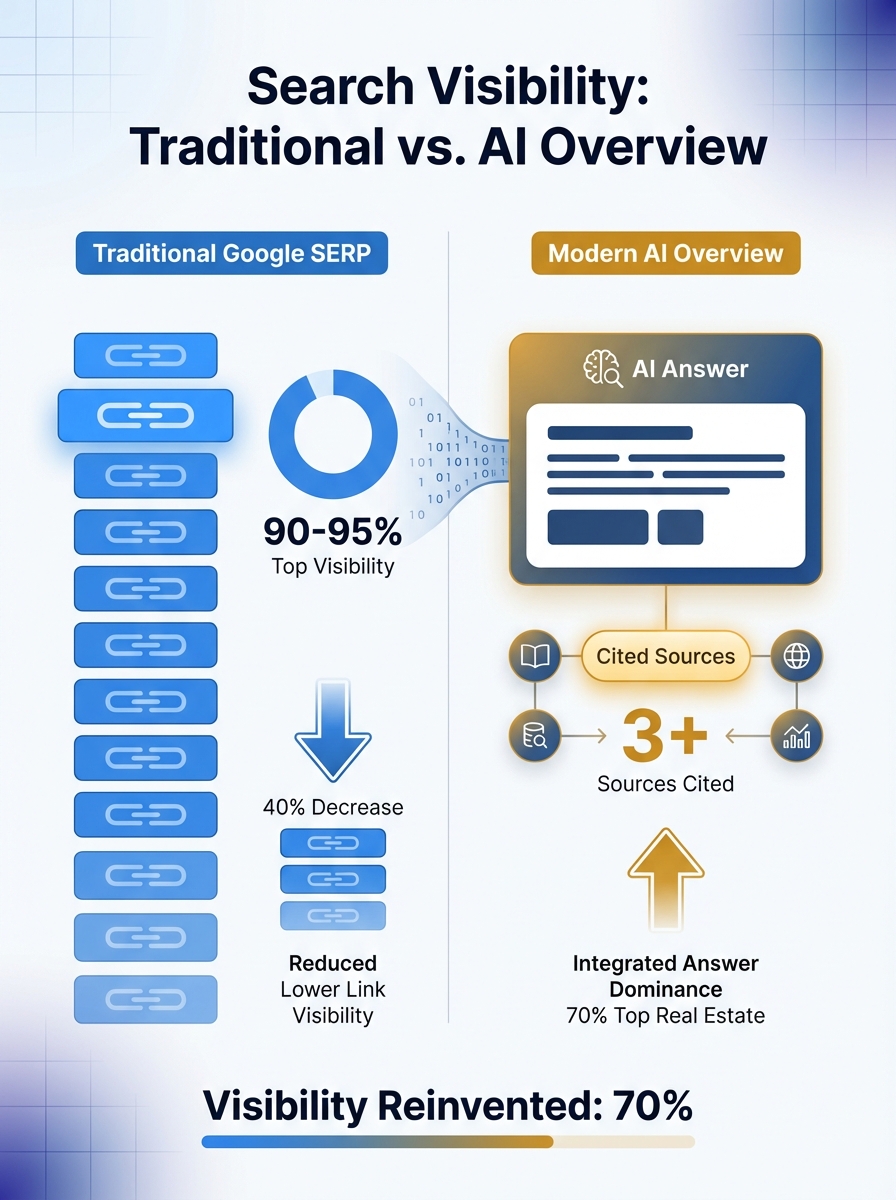
The search landscape has fractured. Gartner projected a 25% drop in traditional search volume by 2026 as AI chatbots absorb queries, and that prediction has proven directionally correct. Only 38% of pages cited in AI answers appear in Google's top 10 organic results, which means your position #3 ranking might not translate to visibility in the AI-generated answer sitting above it.
This shift makes your choice of keyword rank tracking tool more consequential than it's been in years. You're no longer just tracking blue links. You need to know whether your content gets cited in AI Overviews, whether it appears in ChatGPT responses, and how volatile those citations are month to month. AI citation sources rotate 40 to 60 percent monthly, which makes weekly tracking dangerously slow.
If you've been following the changes from the March 2026 core update and AI bot traffic shifts, you already know that traditional SERP position monitoring only tells part of the story now.
The Testing Methodology
Before I walk through each tool, here's how I set up the comparison. I tracked 2,400 keywords across three verticals (B2B SaaS, local services, and ecommerce) for 21 days. Every tool was configured with the same locations, same language, same device settings. I compared results against Google Search Console as a baseline to check accuracy drift.
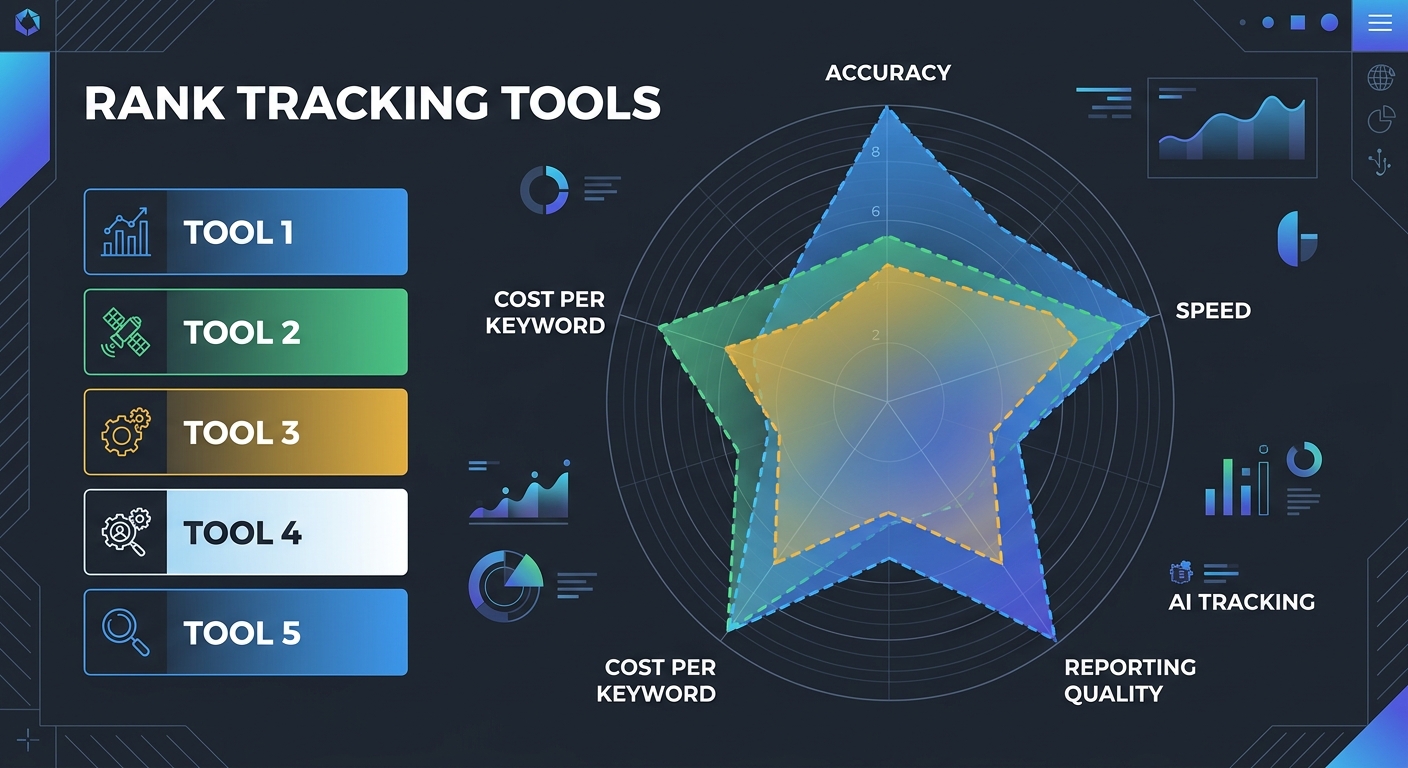
I also scored each tool on five criteria that actually matter to working SEOs:
Accuracy against GSC position data
Refresh speed for catching ranking drops
AI visibility tracking capabilities
Reporting quality for client deliverables
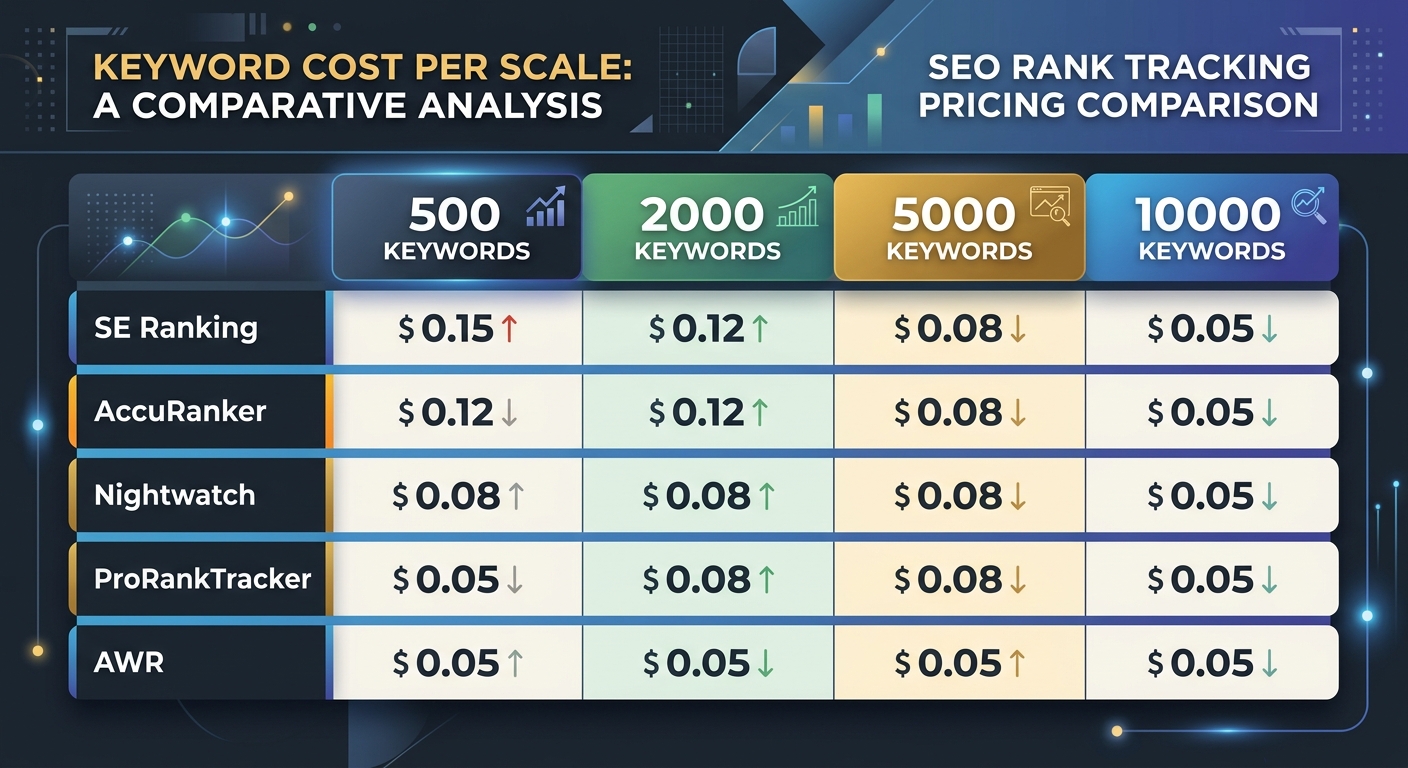
Cost per keyword at realistic scale (1,000+ keywords)
That last one is where most comparison articles fall short. A tool that costs $49/month for 200 keywords looks cheap until you realize you need 5,000 keywords and suddenly you're paying $400.
SE Ranking: The Best All-Around Value
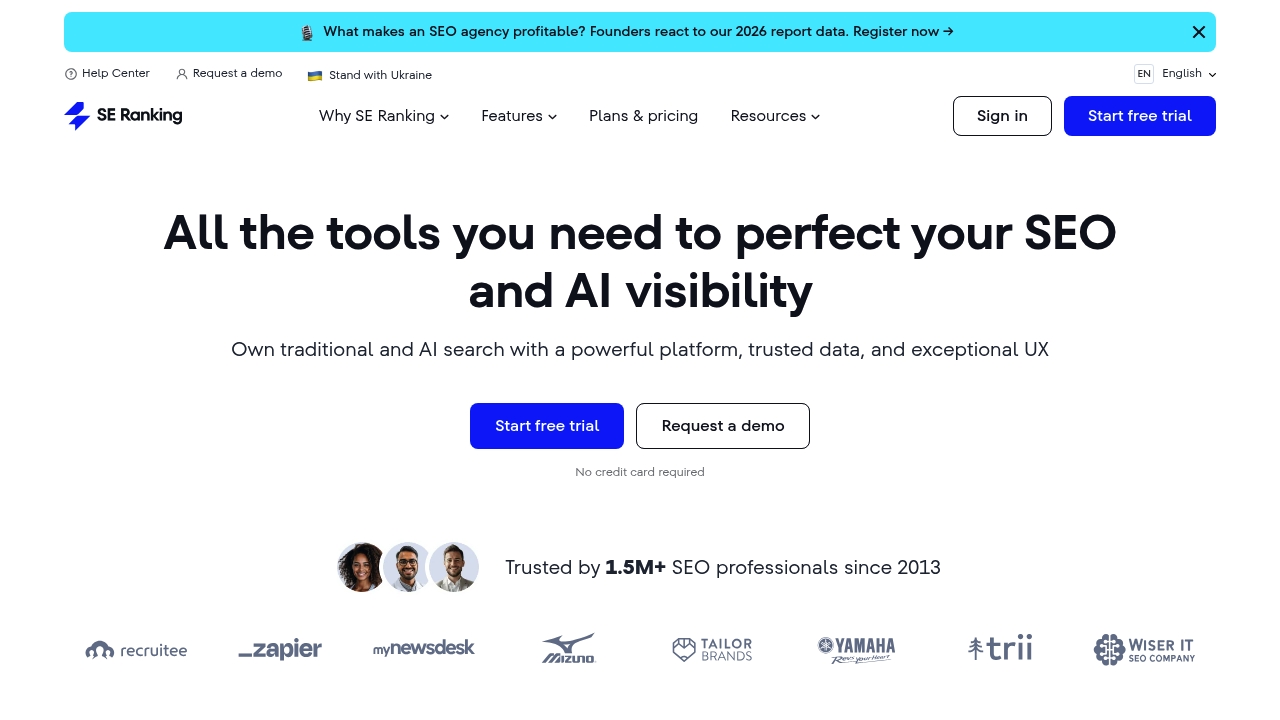
SE Ranking kept surprising me. It matched or beat more expensive tools in accuracy while costing roughly 50% less than Semrush for equivalent keyword volumes. The AI Search Toolkit tracks your visibility across Google AI Overviews, ChatGPT, Gemini, and Perplexity, and it has a particularly useful "No cited" feature that flags when competitors get AI citations and you don't.
For agencies, the white-label reporting and Looker Studio integration feel mature. Plans start at $103.20 per month on annual billing, which includes AI tracking at no extra cost. That's the detail that matters: most competitors charge AI tracking as an add-on.
Where it falls short is refresh speed. You're limited to scheduled daily updates, with no on-demand refresh option. For most use cases that's fine, but if you're monitoring a volatile niche, it can feel slow.
AccuRanker: When Speed Is Everything
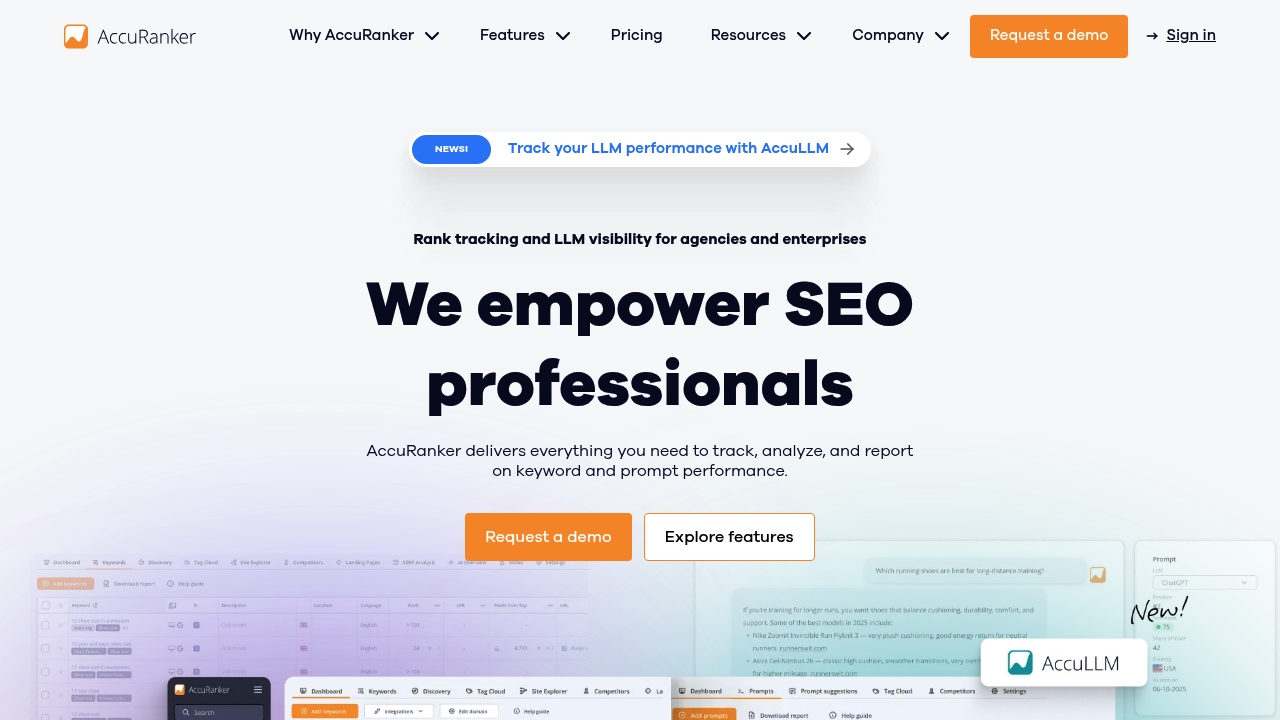
AccuRanker is the fastest rank tracker I've tested. Period. Its unlimited on-demand refreshes mean you can check a keyword's position right now, not wait until tomorrow's scheduled crawl. For enterprise teams managing 10,000+ keywords, this is a genuine differentiator.
The accuracy was the tightest in my testing. Across those 2,400 keywords, AccuRanker had the smallest average deviation from GSC data. The AI CTR model that estimates click-through rates based on SERP features is clever too, giving you a picture of actual traffic potential rather than just raw position.
But you pay for all this. Starting at $224 per month, AccuRanker is the most expensive specialized tracker in this comparison. According to enterprise platform analysis from Getairefs, AccuRanker's unlimited domains across all plans makes portfolio management easier at scale, which partially offsets the higher price if you're handling multiple client sites.
The tool also shines as the best SEO rank tracker for teams that need API access. Its API is well-documented and responsive, which matters if you're piping ranking data into custom dashboards or BI tools.
Nightwatch: The Local SEO Specialist
If you do any meaningful local keyword rank tracking, Nightwatch deserves serious attention. Its geo-grid technology tracks rankings at up to 100 GPS coordinates, giving you ZIP-level and city-specific monitoring that most competitors simply can't match. For multi-location businesses, this granularity is the difference between knowing you rank in "Chicago" and knowing you rank in Lincoln Park but not Wicker Park.
The Map Pack monitoring and Google Business Profile integration round out a local-focused feature set that feels purpose-built. And at $32 per month for the entry tier, the price-to-value ratio is excellent.
Nightwatch is also adding AI visibility features, including LLM prompt tracking and AI Snapshots, though these feel newer and less polished than SE Ranking's AI toolkit. For agencies that need local precision first and AI tracking second, it's still the right call.
Where I'd hesitate is reporting. The client-facing report builder is functional but lacks the polish of AWR or SE Ranking. If beautiful deliverables matter to your client relationships, you'll spend extra time in the export.
ProRankTracker: Budget King at Scale
For agencies tracking thousands of keywords across dozens of clients, ProRankTracker offers the lowest cost per keyword in the market. At scale, you're looking at roughly $0.055 to $0.066 per keyword, which is less than half what most competitors charge.
The tool supports multi-engine tracking across Google, YouTube, Amazon, and Bing. As noted by GrowhackScale, it monitors organic local results, 3-Pack listings, and top 100 map listings. The white-label app lets agencies brand the entire experience for clients, which is a nice touch.
The trade-off is interface polish. ProRankTracker looks and feels like it was designed by engineers who value function over form. Navigation isn't intuitive at first, and some report customization requires more clicks than it should. If your team can get past the learning curve, the economics are compelling.
AI visibility tracking is present but basic. It covers Google AI Mode and AI Overviews but doesn't extend to ChatGPT or Perplexity yet.
Advanced Web Ranking: The Reporting Powerhouse
AWR has been around for over 20 years, and its SERP accuracy reflects that maturity. But the real reason agencies choose AWR is the WYSIWYG report builder. It's the most flexible reporting tool in this category, with FTP export, API access, and deep customization options that let you build exactly the client deliverable you need.
If you're feeding ranking data into proprietary dashboards or BI platforms, AWR's data export capabilities are unmatched. Plans start at $139 per month, which positions it in the mid-range.
The weakness is similar to ProRankTracker: AI visibility tracking exists but isn't the core focus. AWR excels at traditional SERP feature tracking, including AI Overviews, but it doesn't simulate prompts across multiple LLM platforms.
The Elephant in the Room: Semrush and Ahrefs
Both Semrush and Ahrefs include rank tracking as part of their all-in-one SEO suites, and for many teams, that bundled approach is the path of least resistance. If you already use Semrush for keyword research and competitor analysis, adding rank tracking to the same subscription makes administrative sense.
But specialized rank trackers beat them on depth and cost. Semrush's AI visibility module is growing but less mature than SE Ranking's purpose-built toolkit. Ahrefs' Brand Radar feature is still in beta. And when you're paying $139+ per month primarily for rank tracking, you're overpaying compared to purpose-built alternatives.
My recommendation: use Semrush or Ahrefs for research and audits, then pair them with a dedicated tracker. This is especially true if you're rebuilding your SEO strategy for AI-driven search, where you need tooling that treats AI citations as first-class data, not an afterthought.
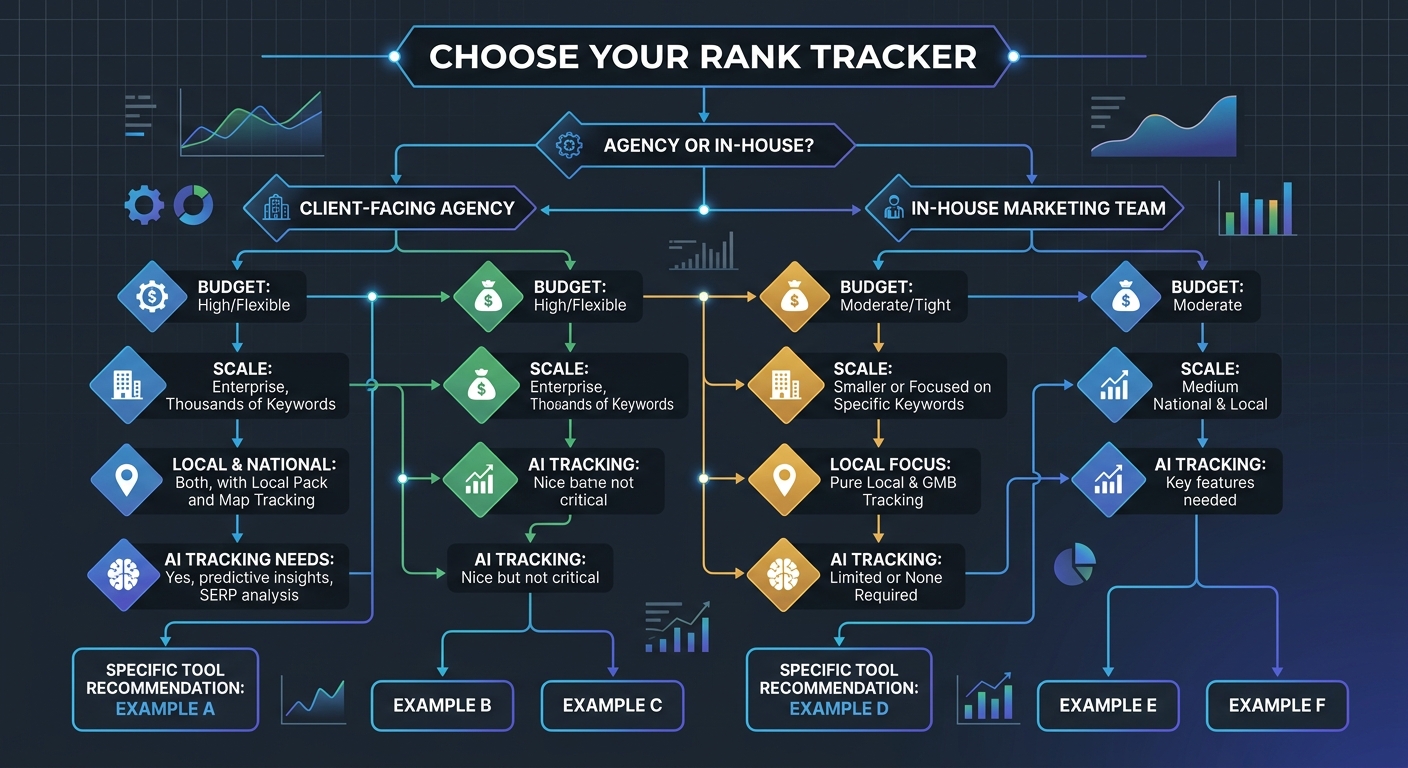
How to Choose: A Decision Framework
Stop comparing feature lists. Instead, answer these four questions:
What's your primary use case? Agency reporting needs different tools than in-house monitoring. If you need white-label reports, SE Ranking or AWR should be your shortlist.
How many keywords do you actually need to track? Be honest. Tracking 10,000 keywords when 2,000 would give you the same strategic insight is a common trap. I've written about why tracking keyword rankings well beats tracking everything poorly.
Do you need real-time data? If ranking volatility directly impacts revenue (think ecommerce during sales events), AccuRanker's on-demand refresh is worth the premium. For most content-driven sites, daily updates are sufficient.
How important is AI visibility to your strategy? If you're in a niche where AI Overviews dominate the SERP, a tool without AI tracking is giving you an incomplete picture. This is doubly true given how AI scrapers are reshaping keyword strategy.
My Verdict for This Rank Tracker Review 2026
SE Ranking wins for most teams. It delivers the broadest feature set at the best price point, with AI visibility tracking included rather than bolted on. It's what I'd recommend to any agency running 3 to 15 client accounts who wants a single platform for SERP position monitoring and AI citation tracking.
AccuRanker wins if speed is non-negotiable. Enterprise teams with high keyword volumes and a need for real-time data won't find a better option.
Nightwatch wins for local SEO. The geo-grid tracking is genuinely differentiated.
ProRankTracker wins on budget. If you're tracking at massive scale and every dollar per keyword matters, the math speaks for itself.
The one thing all these tools have in common? They're only as good as your configuration. Set your locations precisely, choose the right device types, validate against Search Console data, and review your keyword lists quarterly. The best rank tracking software is the one you've set up correctly and actually check.

Sarah Chen
SEO strategist and web analytics expert with over 10 years of experience helping businesses improve their organic search visibility. Sarah covers keyword tracking, site audits, and data-driven growth strategies.
Explore more topics