
Best Rank Trackers for 2026: Tools Every SEO Professional Needs
I switched rank trackers three times in the past eighteen months. Not because I'm indecisive, but because the tool that worked perfectly for tracking Google positions became borderline useless once AI search started eating 60% of the clicks that used to flow through traditional blue links.
Best Rank Trackers for 2026: Tools Every SEO Professional Actually Needs
I switched rank trackers three times in the past eighteen months. Not because I'm indecisive, but because the tool that worked perfectly for tracking Google positions became borderline useless once AI search started eating 60% of the clicks that used to flow through traditional blue links. The old paradigm of "check your position for keyword X on Google" still matters, but it's now only half the picture. If your SERP tracking software can't tell you whether ChatGPT, Gemini, or Perplexity is citing your content, you're flying with one eye closed.
This is my honest breakdown of the best rank trackers available right now, what each one actually excels at, and where each falls short. No affiliate-driven rankings. Just what I've seen work across my own projects and client accounts.
The Rank Tracking Landscape Has Split in Two
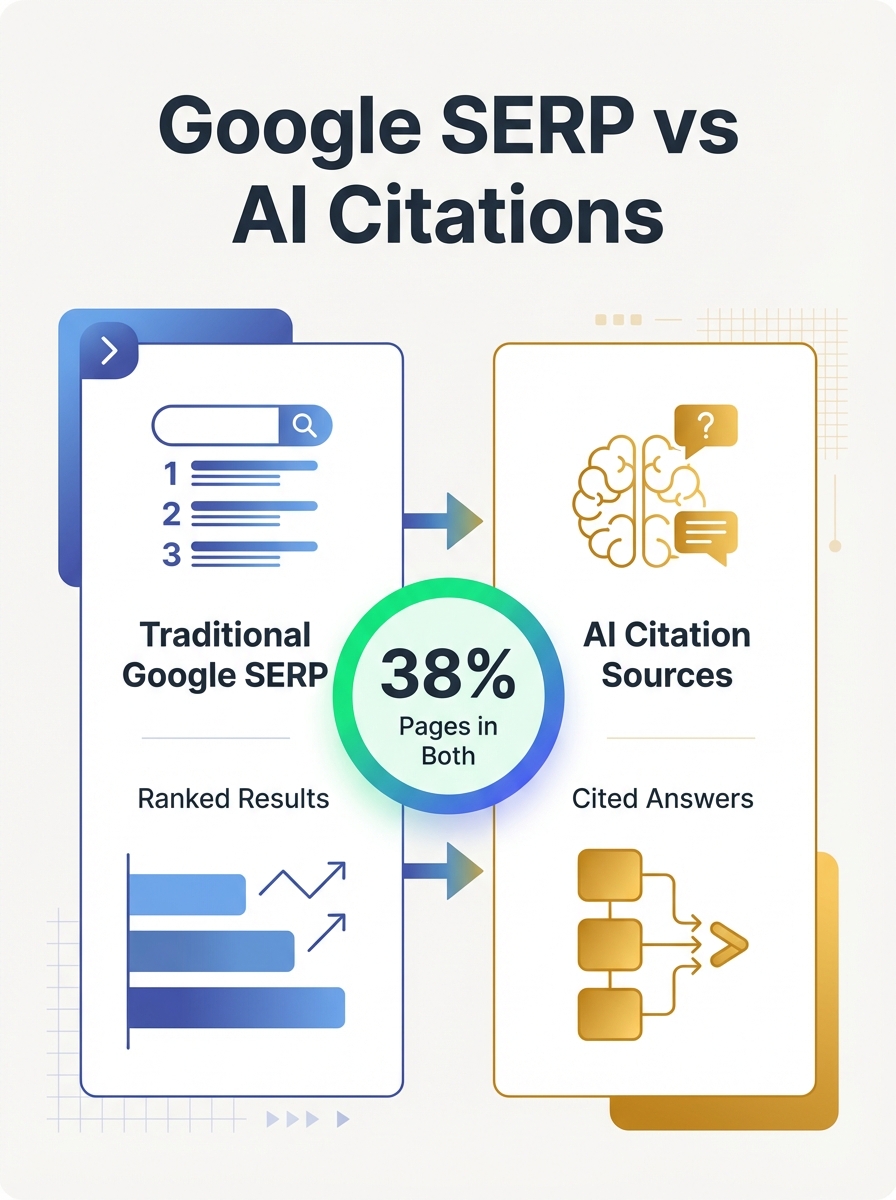
Here's the uncomfortable truth: only 38% of pages cited in AI-generated answers appear in Google's top 10 results. That stat alone should make you rethink your entire monitoring setup. A page can rank third on Google and never get mentioned by an AI assistant, while a page buried on page two might be the primary source ChatGPT pulls from.
This split means any serious rank tracker comparison 2026 needs to evaluate tools on two axes: traditional SERP tracking and AI visibility tracking. Some tools do both. Most still focus heavily on the first and tack on the second as an afterthought.
The shift toward AI-driven search has created an entirely new category of metrics you need to care about: citation frequency, mention-vs-link distinction, and cross-platform visibility across ChatGPT, Google AI Overviews, Perplexity, and Microsoft Copilot.
What to Actually Look For in a Rank Tracker
Before I get into specific tools, here's what separates the best rank trackers from the mediocre ones:
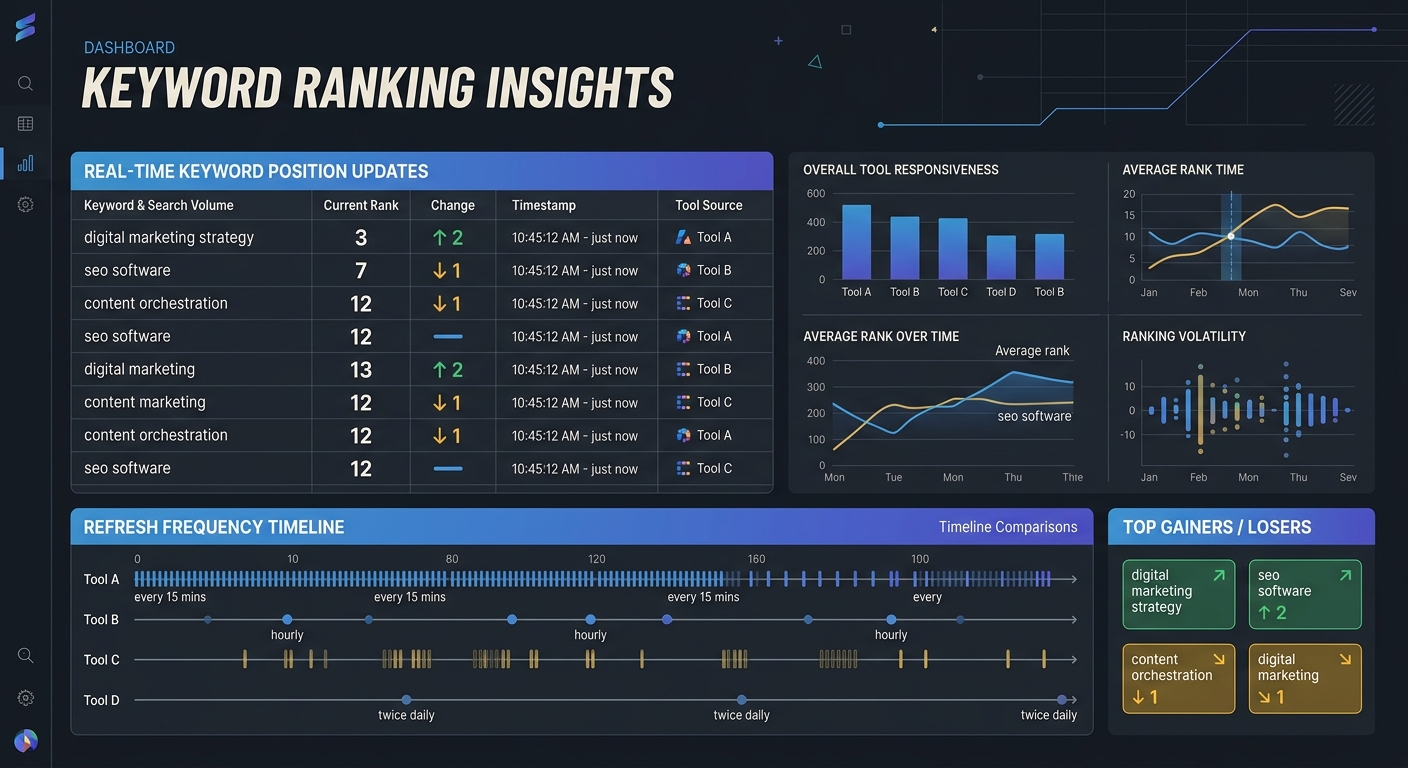
Refresh frequency matters more than ever. AI citation sources rotate 40-60% monthly. Weekly refreshes are too slow. You need daily at minimum, and on-demand for competitive keywords.
Multi-platform coverage. Google-only tracking is table stakes. You need to know your visibility across AI platforms too.
Actionable gap analysis. The tool should show you where competitors are getting cited and you're not, not just report numbers.
Accuracy you can actually verify. Some tools sample data; others check exact positions. The difference matters when you're reporting to stakeholders.
Reasonable pricing per keyword. Agencies tracking thousands of keywords across dozens of clients need unit economics that don't bankrupt them.
If your analytics data already feels unreliable, layering a questionable rank tracker on top only compounds the problem. Getting your analytics foundation right is a prerequisite for trusting any external tracking tool.
The Tools, Ranked by Use Case
I'm not going to give you a generic top-10 list. Instead, I'll group these by the type of SEO professional who should actually use each one.
SE Ranking: Best All-Around for Agencies
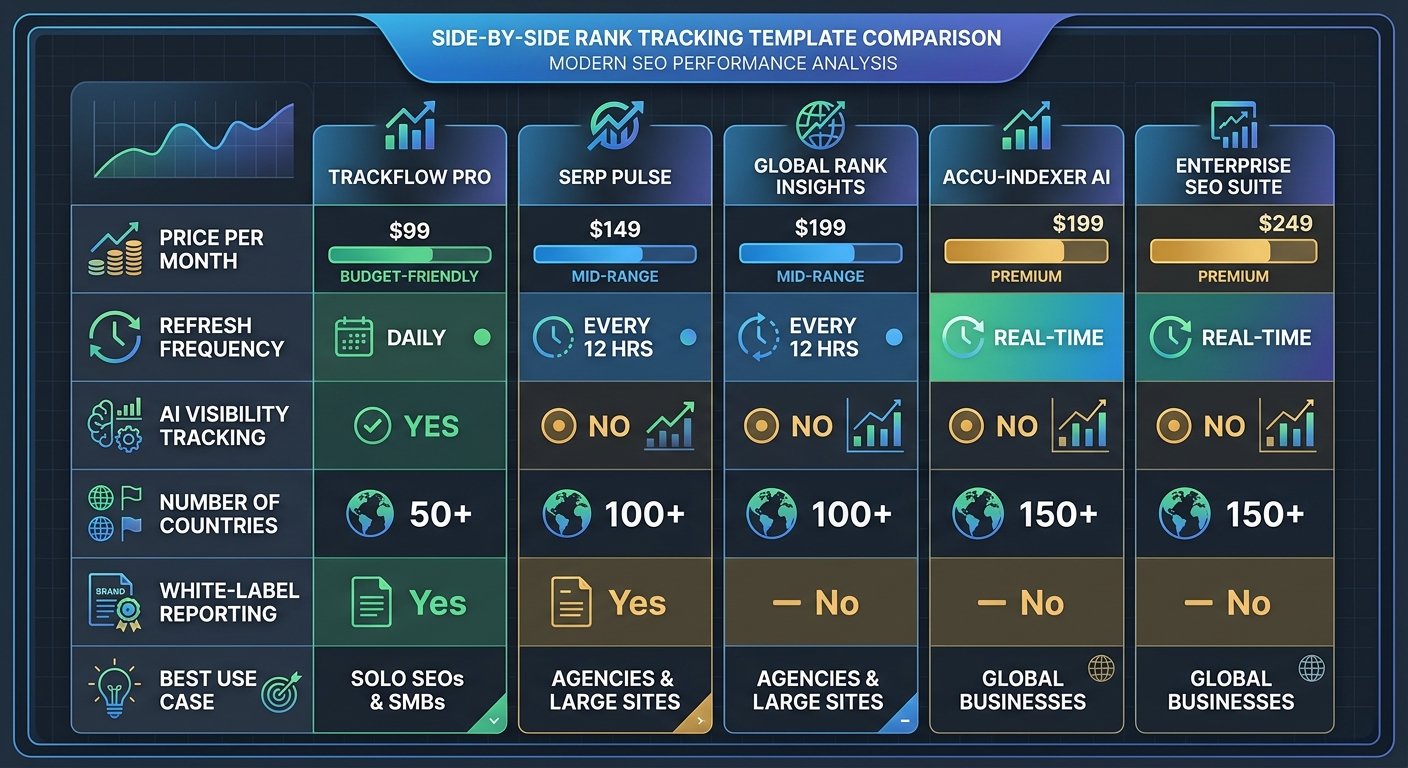
SE Ranking has quietly become the best value proposition in the keyword rank tracker space, especially for agencies managing multiple clients. At roughly $95/month, you get daily rank updates across 188 countries, white-label reporting, and actual AI visibility tracking baked into the core product.
What makes it stand out is the "No Cited" feature, which flags prompts where your competitors are getting cited in AI answers but your client isn't. That turns passive monitoring into a content brief. You can see exactly where the gaps are and act on them.
The downside? The interface feels cluttered when you first set it up. There's a learning curve, and the sheer number of features can overwhelm solo operators who just need basic position tracking. But for agencies juggling ten or twenty clients, the multi-client management alone justifies the price.
AccuRanker: Best for Speed-Obsessed Teams
AccuRanker does one thing better than anyone else: speed. Unlimited on-demand refreshes mean you can check a keyword's position right now, not whenever the next scheduled crawl happens. For teams that need to react to algorithm updates or track the impact of changes within hours, this is the tool.
At $116/month, it's pricier than SE Ranking, and it doesn't include AI visibility tracking yet. That's a significant gap. But the accuracy and refresh speed of its traditional SERP tracking are best-in-class, as tested by multiple agency reviewers.
If your rankings recently took a hit from the March core update, AccuRanker's speed lets you diagnose what changed faster than any competitor.
Ahrefs: Best for Competitive Intelligence
Everyone knows Ahrefs for backlink analysis, but its rank tracker deserves more credit than it gets. The data quality is unusually reliable, and the historical trend data goes deep. When you need to understand not just where you rank today but how that position has shifted over six or twelve months, Ahrefs delivers clean, dependable charts.
Where Ahrefs falls short in 2026 is AI search visibility. Its AI tracking capabilities are limited compared to purpose-built tools. You'll need to pair it with something else if AI citation monitoring matters to your strategy. At $129/month, you're paying a premium, but you're also getting the full suite of backlink monitoring, content gap analysis, and keyword research alongside the rank tracker.
Otterly.AI: Best Budget Option for AI-Focused Tracking
If you're a solo marketer or startup founder who cares primarily about AI search visibility, Otterly.AI at around $19/month is hard to beat on price. It tracks your citations across major AI platforms and gives you a clean dashboard without the complexity of full SEO suites.
The catch: it doesn't support technical SEO audits or keyword research, making it a companion tool rather than a replacement. Think of it as a specialized sensor, not a command center. You'll still need something like SE Ranking or Ahrefs for your broader SEO work.
Semrush: Best for Large Teams with Diverse Needs
Semrush remains the Swiss Army knife. Its rank tracking is solid, its keyword database is massive, and the integration with content planning, site auditing, and PPC tracking makes it a single platform for teams that don't want to juggle five subscriptions.
At $117/month for the entry plan, it's competitive. But the rank tracking module specifically isn't best-in-class anymore. Refresh rates are slower than AccuRanker, AI visibility is still being built out, and the interface can feel bloated for someone who only needs position tracking.
If your team is already building content strategies around pillar pages, Semrush's integration between keyword tracking and content planning creates a useful feedback loop.
The AI Visibility Gap You Can't Ignore
AI search is approaching 1 billion users globally, with an estimated 27% of consumers using AI assistants for roughly half their searches. Gartner projects a 25% drop in traditional search volume by the end of this year. These aren't future projections anymore. This is happening now.
And here's what makes it tricky for rank tracking: AI citation sources are volatile. SparkToro found that citations rotate 40-60% monthly. The same prompt can return different sources on different days. That means point-in-time snapshots are nearly worthless for AI visibility. You need trend data over weeks and months to see meaningful patterns.
The practical implication? Whatever SEO rank tracker you choose, make sure it stores historical AI citation data, not just current snapshots. You need to see whether your citation frequency is trending up or down, not just whether you were cited on Tuesday.
This connects directly to how AI scrapers are reshaping keyword strategy. The content that gets cited in AI answers tends to be structured, fact-dense, and clearly sourced. Optimizing for citation is a different discipline than optimizing for traditional rankings.
How to Set Up Your Tracking Stack
Here's the framework I use for most clients:
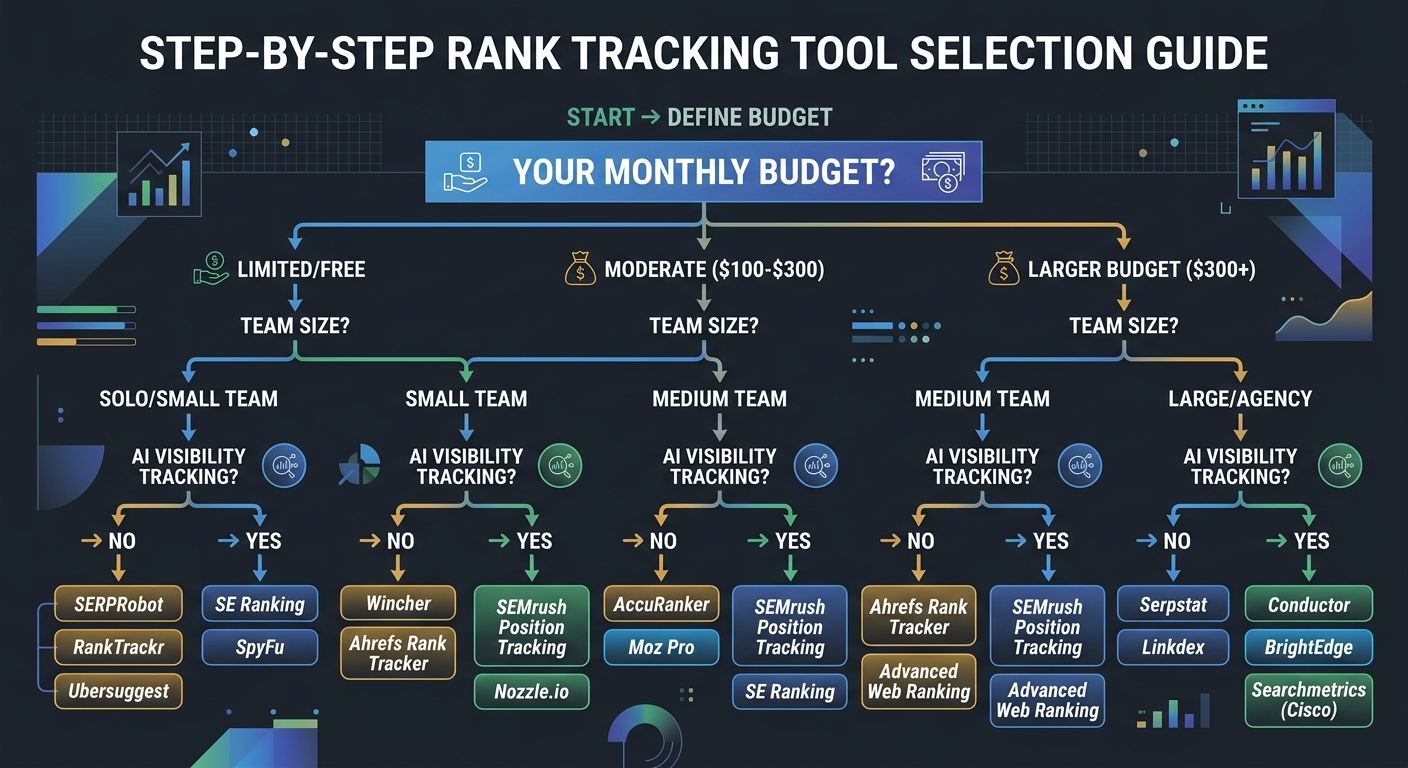
Pick one primary rank tracker for traditional SERP positions. SE Ranking or Ahrefs for most teams. AccuRanker if speed is non-negotiable.
Add AI visibility tracking if your primary tool doesn't cover it well. Otterly.AI is the most affordable add-on. SE Ranking handles both if you go that route.
Define your keyword segments. Don't track everything. Group keywords by intent, funnel stage, and business impact. Track your top 50-100 money keywords daily. Track your long-tail pool weekly.
Set up competitive benchmarks. Track at least three direct competitors on every keyword segment. The goal isn't vanity metrics; it's understanding where you're gaining and losing ground.
Build alert thresholds. Configure notifications for drops of three or more positions on priority keywords. Don't alert on every fluctuation, or you'll drown in noise.
The local tracking dimension adds another layer of complexity. If your business serves specific geographic markets, make sure your tool supports location-specific rank checks, not just country-level data.
Common Mistakes I Keep Seeing
Tracking too many keywords with too little context. I've audited accounts with 5,000 tracked keywords where nobody could explain why half of them were there. More keywords don't mean better insights. Every tracked keyword should map to a business objective or content asset.
Ignoring SERP feature changes. Your position might stay at #3, but if Google added an AI Overview above you, your click-through rate just dropped by 40-60%. The best rank tracking tools now flag when SERP features change around your keywords. Pay attention to that data.
Checking rankings but never acting on them. A rank tracker is a diagnostic tool, not a strategy. If you're checking positions every morning but never auditing your content plan based on what you find, you're just watching numbers move.
What I'd Actually Buy Today
If I were starting from scratch with a moderate budget and needed one tool? SE Ranking. The combination of traditional rank tracking, AI visibility monitoring, and agency-friendly features at roughly $95/month is the strongest value in the market. It's not perfect, but it covers the widest ground without forcing you into expensive add-ons.
If money were no object and I wanted best-in-class everything? AccuRanker for real-time SERP tracking plus Otterly.AI for AI visibility. Two specialized tools that each excel at their specific job.
And if I were a solo operator watching every dollar? Otterly.AI for AI visibility at $19/month, supplemented with Ahrefs' free webmaster tools for basic position tracking. Not ideal, but functional.
The one thing I wouldn't do is stick with a single tool that only tracks traditional Google positions. That era is over. The best-performing SEO tools in 2026 are the ones that bridge the gap between where search has been and where it's going. Your rank tracker should do the same.

Sarah Chen
SEO strategist and web analytics expert with over 10 years of experience helping businesses improve their organic search visibility. Sarah covers keyword tracking, site audits, and data-driven growth strategies.
Frequently Asked Questions
- What percentage of pages cited in AI answers don't appear in Google's top 10 results?
- Only 38% of pages cited in AI-generated answers appear in Google's top 10 results, meaning a page can rank third on Google and never get mentioned by an AI assistant, while a lower-ranking page might be the primary source ChatGPT pulls from.
- How often do AI citation sources rotate?
- AI citation sources rotate 40-60% monthly, which means point-in-time snapshots are nearly worthless for AI visibility tracking and you need trend data over weeks and months to see meaningful patterns.
- What is SE Ranking's monthly price and what features does it include?
- SE Ranking costs roughly $95/month and includes daily rank updates across 188 countries, white-label reporting, and AI visibility tracking with a 'No Cited' feature that flags where competitors are getting cited in AI answers but your content isn't.
- Which rank tracker offers unlimited on-demand refreshes?
- AccuRanker offers unlimited on-demand refreshes, allowing you to check a keyword's position immediately rather than waiting for scheduled crawls, though it doesn't yet include AI visibility tracking.
- What should you do if your primary rank tracker doesn't cover AI visibility well?
- You should add a specialized AI visibility tool like Otterly.AI (around $19/month) to supplement your primary rank tracker, unless your main tool like SE Ranking already includes comprehensive AI monitoring.
- How much has Gartner projected traditional search volume will drop?
- Gartner projects a 25% drop in traditional search volume by the end of the year as AI search approaches 1 billion users globally, with an estimated 27% of consumers using AI assistants for roughly half their searches.
- What rank tracking mistakes should you avoid?
- Avoid tracking too many keywords without context, ignoring SERP feature changes (like AI Overviews that can reduce click-through rates by 40-60%), and checking rankings without acting on the data by updating your content strategy based on findings.
Explore more topics