
Best SERP Tracking Tools in 2026: A Hands-On Comparison
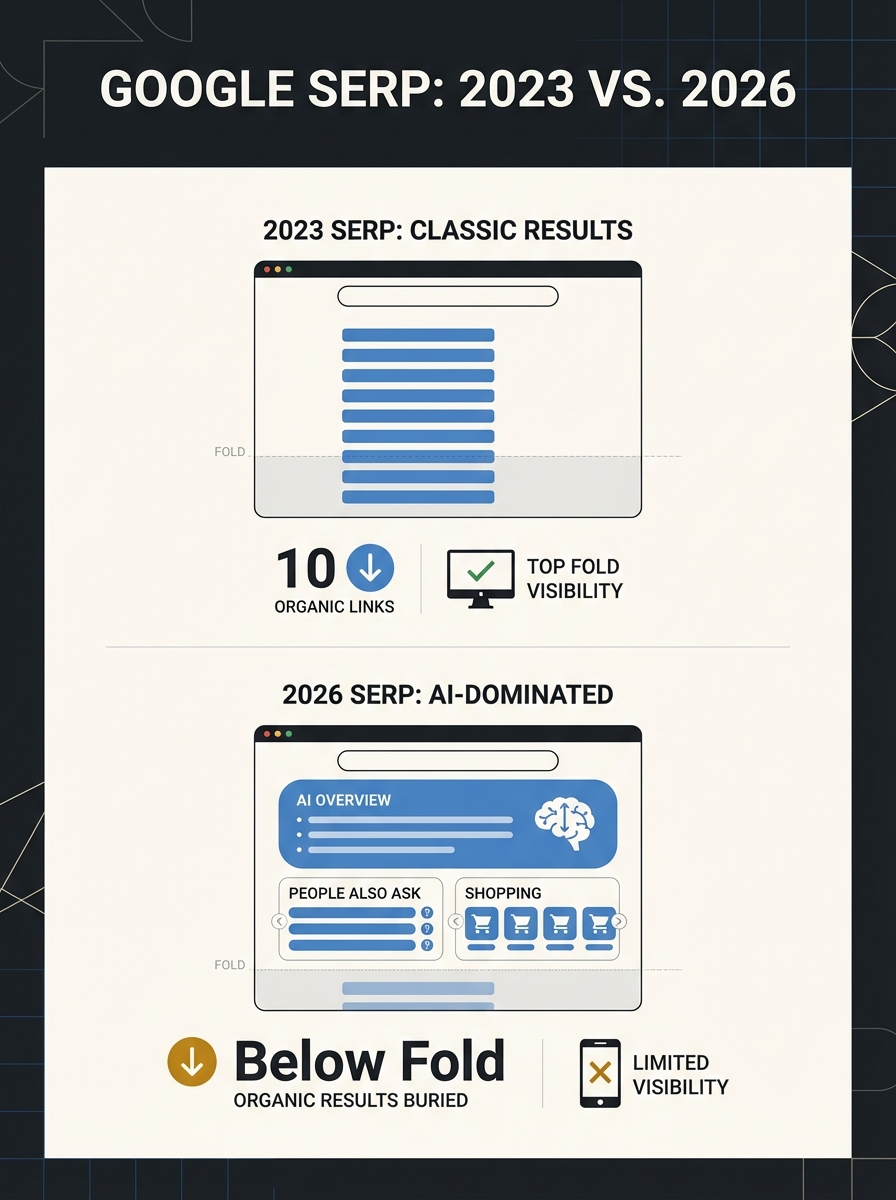
"Position 1" is a lie. I'm staring at a keyword where my client technically ranks first organically, yet the link sits 1,200 pixels below the fold, buried under an AI Overview, a People Also Ask box, and a shopping carousel. The click-through rate? A dismal 2.3%.
Best SERP Tracking Tools in 2026: A Hands-On Comparison
"Position 1" is a lie. I'm staring at a keyword where my client technically ranks first organically, yet the link sits 1,200 pixels below the fold, buried under an AI Overview, a People Also Ask box, and a shopping carousel. The click-through rate? A dismal 2.3%. And the tool I was using reported it as a win. That disconnect between what rank trackers report and what users actually see on the page forced me to rethink my entire approach to keyword position tracking this year. I tested nine tools across three client accounts over 60 days. Here's what I found.
The Problem With Traditional Rank Numbers
For years, SEO rank monitoring was straightforward. You tracked a keyword, got a position number, and made decisions accordingly. That model is breaking down fast.
AI Overviews now appear on over 60% of searches, and when they do, the organic CTR for traditional results drops by a staggering 61%. A "Position 1" ranking behind an AI Overview is fundamentally different from a Position 1 ranking on a clean SERP. Yet most tools report them identically.
The shift toward pixel rank matters here. Instead of counting ordinal positions, the metric that actually correlates with traffic is how far down the page your result appears in actual screen pixels. Some tools have adapted to this reality. Many haven't.
And there's a second blind spot. If you're only tracking traditional Google rankings, you're ignoring the fact that AI platforms like ChatGPT, Perplexity, and Gemini are now sending measurable referral traffic. Your brand might get recommended in AI-generated answers for queries you never even tracked. Or worse, your competitor might. This is the landscape that the best SERP tracking tools need to address, and why a hybrid SEO strategy covering multiple search engines is no longer optional.
My Testing Methodology
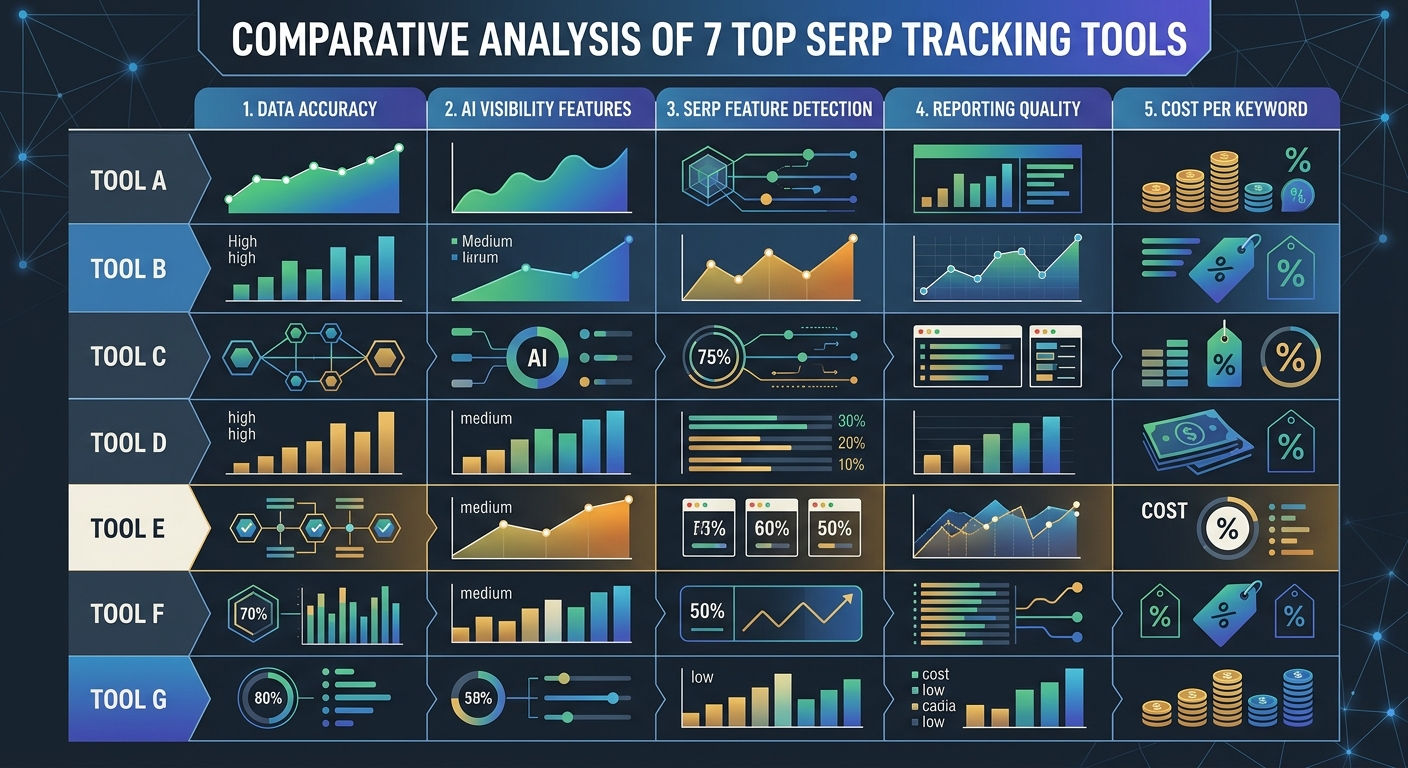
I tracked 450 keywords across three accounts: a B2B SaaS company, a local services business with 12 locations, and an e-commerce brand. Every tool ran simultaneously for 60 days. I compared each on five criteria:
Data accuracy against manual spot-checks
AI visibility features (tracking mentions in AI-generated answers)
SERP feature detection (AI Overviews, featured snippets, local packs)
Reporting quality for client communication
Cost per keyword at scale
Here's how the top contenders performed.
Semrush Position Tracking
Semrush has leaned hard into what they call their AI Visibility Toolkit, and it shows. The platform now tracks brand mentions across ChatGPT, Gemini, and Perplexity alongside traditional rankings. Their Share of Voice 2.0 metric accounts for pixels occupied on the SERP rather than just position numbers, which gives you a far more realistic picture of actual visibility.
Where Semrush shines is the all-in-one workflow. You can move from rank data to content gap analysis to backlink auditing without switching tools. For my B2B SaaS client, this meant I could spot a ranking drop, identify the competing page that overtook us, analyze their backlink profile, and draft an action plan inside one interface.
The downside? Price. At $199/month for the Pro plan, it's not cheap, and the keyword limits on lower tiers feel restrictive if you're managing multiple domains. But if you're already in the Semrush ecosystem, the position tracking module is genuinely strong.
AccuRanker
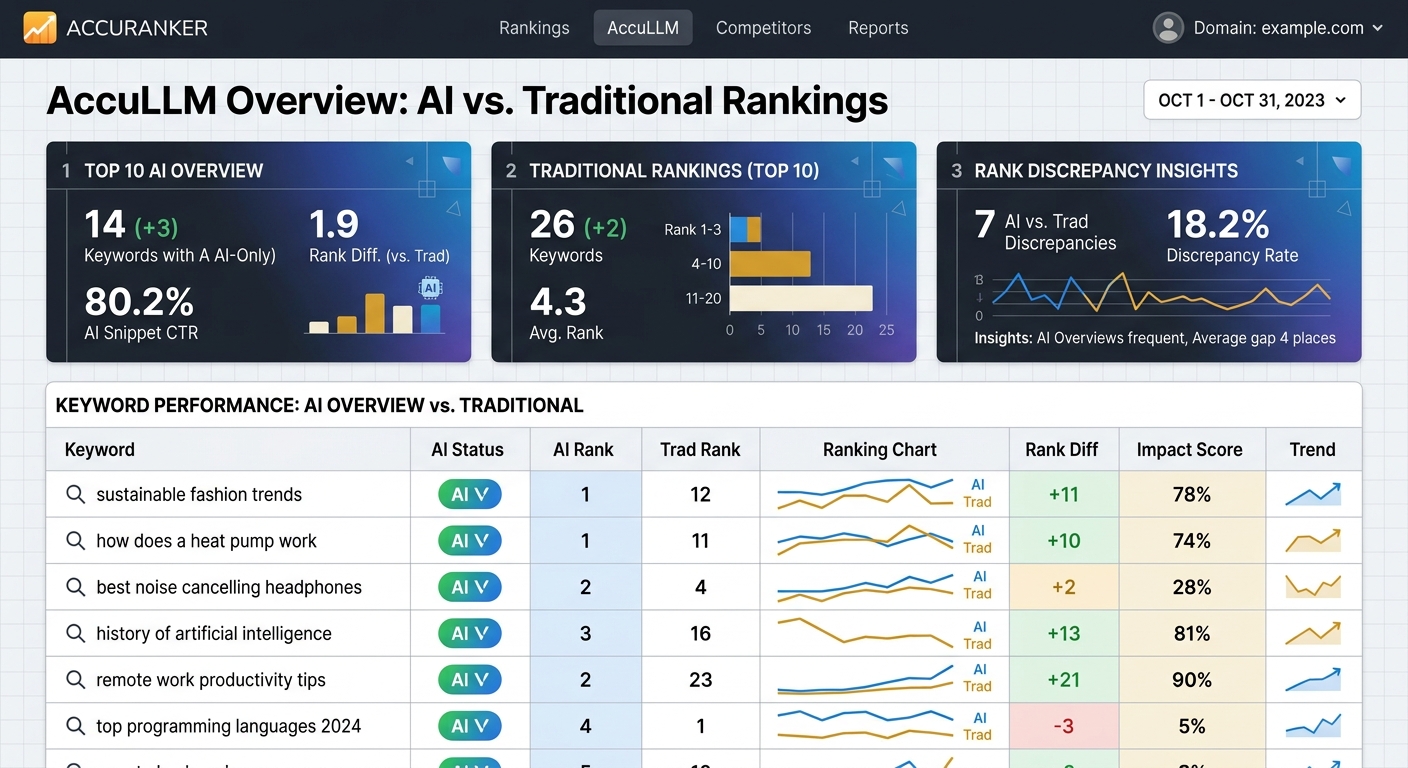
AccuRanker is purpose-built for one thing: fast, accurate rank tracking. And it does that one thing exceptionally well. Daily updates are standard, on-demand refreshes are available, and the data consistently matched my manual spot-checks within a margin of one position.
Their AccuLLM module is the standout addition for 2026. It specifically monitors AI Overview appearances and tracks how LLM-generated answers reference your content. For the e-commerce client, this helped us identify 23 keywords where we appeared in AI Overviews but not in traditional organic results, a pattern we would have completely missed with older tools.
Speed is AccuRanker's real advantage. When you're tracking thousands of keywords and need fresh data for a Monday morning client call, waiting 24 hours for a crawl cycle is painful. AccuRanker delivers. Custom pricing means you'll need to talk to sales, but agencies tracking at scale generally find it competitive.
SE Ranking
SE Ranking has quietly become the best value proposition in the SERP tracker market. It tracks positions inside Google Map Pack results, offers branded white-label reports, and as Daily Emerald's analysis confirms, its AI Tracker now monitors brand mentions and citations within AI-generated answers.
For my local services client with 12 locations, SE Ranking was the clear winner. The ability to track local rankings at the ZIP code level, combined with Map Pack monitoring, gave us granular data that justified specific location-based content investments. If you need local keyword rank tracking done right, this tool deserves serious consideration.
SE Ranking also analyzes which sources AI Overviews cite, including third-party sites like Reddit and Quora. This is critical intelligence. When we discovered that a Reddit thread was being cited in the AI Overview for our client's highest-value keyword, we shifted strategy to include community engagement alongside traditional SEO.
Pricing starts significantly lower than Semrush or Ahrefs, making it a practical option for smaller teams or agencies managing multiple client accounts without enterprise budgets.
Ahrefs Rank Tracker
Ahrefs brings its signature backlink depth to the rank tracking game. The historical SERP replay feature is genuinely useful for diagnosing ranking drops. You can scrub through time and see exactly what changed on the SERP for any tracked keyword.
But here's my honest take: Ahrefs' native AI visibility tracking still lags behind the competition. If your primary concern is traditional organic rankings and competitive backlink analysis, it's excellent. If you need to understand how your brand appears in AI-generated answers across multiple platforms, you'll need to supplement it with another tool.
At $29/month for the starter plan, it's accessible. The keyword tracking limits on that tier are tight, though, so most professionals will end up on a higher plan.
LLMrefs: The AI-First Newcomer
This is the tool that surprised me most. LLMrefs takes a fundamentally different approach: instead of tracking Google rankings, it tracks how your content gets referenced in AI-generated answers across seven AI platforms. It calculates an aggregated weighted rank that tells you where your brand sits in the AI recommendation landscape.
For keywords where AI Overviews have essentially eliminated organic clicks, this data is invaluable. We used LLMrefs alongside our traditional SERP tracker to build a complete picture, and the insights directly informed our content strategy. SparkToro's 2026 research found significant variability in AI-generated brand recommendations even with identical prompts, which means point-in-time snapshots can be misleading. LLMrefs addresses this by tracking trends over time rather than single data points.
The free tier is generous enough to evaluate the tool properly. Pro starts at $79/month. If the shift from blue links to AI recommendations is affecting your traffic, this fills a gap that traditional SERP tracking tools simply don't cover.
STAT Search Analytics (Moz)
STAT is the enterprise workhorse. If you're tracking 10,000+ keywords with daily granularity and need clean BI exports for data teams, STAT handles it without breaking a sweat. The SERP feature parsing is thorough, and the segmentation options let you slice data by intent type, page, or custom tags.
The cost reflects its positioning: roughly $720/month for 6,000 keywords. That's not a tool for freelancers. But for enterprise teams where understanding why your analytics data tells conflicting stories matters, STAT's data integrity is worth the premium.
Nightwatch: The Local SEO Specialist
For agencies managing local SEO across multiple client locations, Nightwatch offers white-label reporting with local and organic performance clearly separated. Clients see exactly which tactics drive which results. If your book of business is restaurants, dental practices, or law firms where "near me" searches dominate, Nightwatch earns its keep.
Building Your Tool Stack
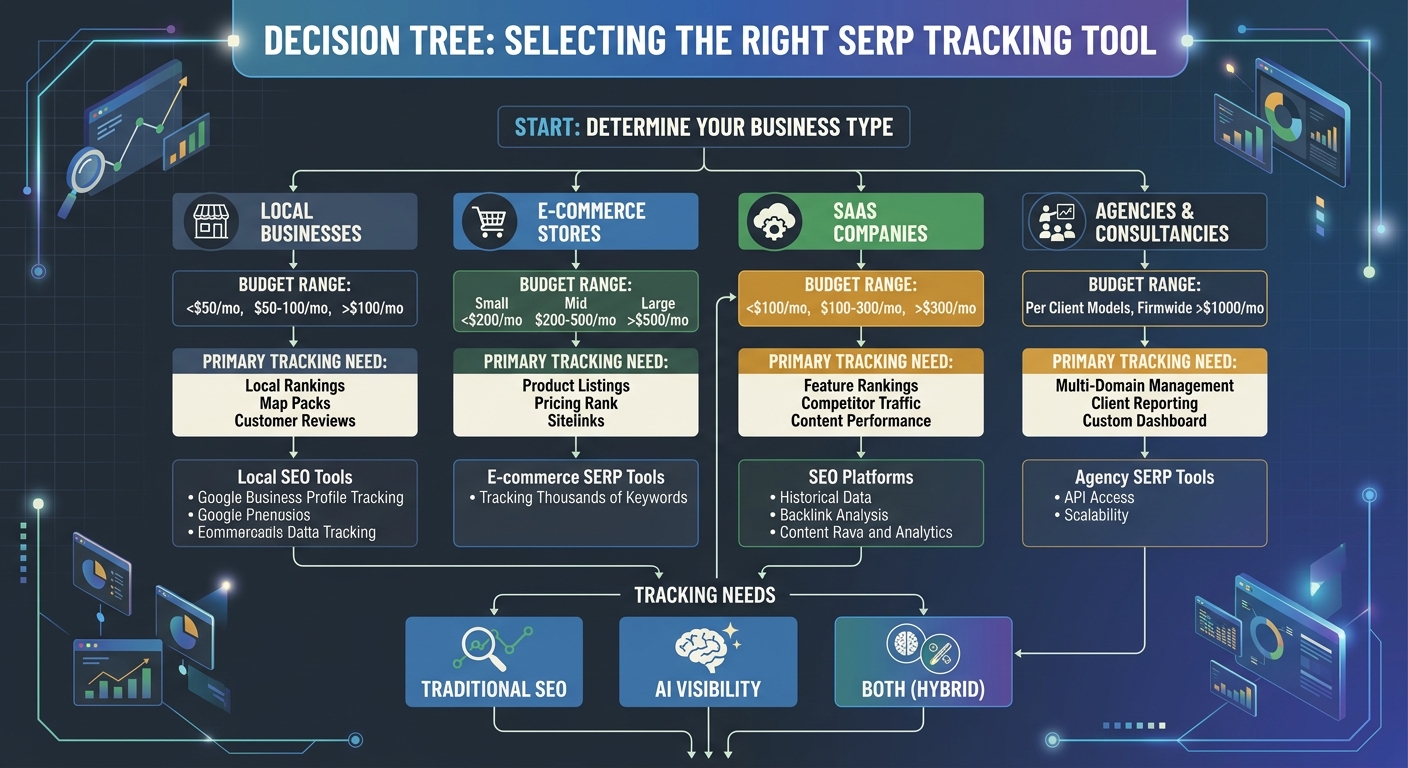
Here's what I've landed on after testing. No single tool does everything well. The best rank trackers in 2026 need to cover three distinct layers:
Traditional rank tracking: Where you appear in organic results, how that position changes over time, and which SERP features surround your listing
AI visibility monitoring: Whether AI platforms mention, cite, or recommend your brand when users ask relevant questions
SERP visual analysis: What the actual page looks like, how much real estate you occupy, and where your result sits in pixel depth
For most teams, I'd recommend pairing one strong traditional SERP checker with one AI-focused tool. My current stack for client work is SE Ranking (for traditional tracking and local SEO) plus LLMrefs (for AI visibility), with Semrush available for deeper competitive analysis when needed.
Google's deprecation of the num=100 search parameter forced many budget trackers to make more individual queries for full SERP data, which increased costs and reduced reliability for cheaper platforms. This "Great Decoupling" means the gap between tools with solid crawling infrastructure and those relying on outdated methods is wider than ever. Don't cheap out on your primary tracker.
What To Do With This Information
Stop treating rank tracking as a vanity metric dashboard. The data from these tools should feed directly into content decisions. When I see a keyword where we rank well organically but don't appear in AI Overviews, that's a content optimization opportunity. When we appear in AI answers but not in traditional results, that tells a different story about how search engines interpret our content's authority.
The March 2026 core update reshaped competitive rankings in ways that made multi-signal tracking essential. If your current SERP tracking tool only shows you position numbers, you're making decisions with incomplete data. And incomplete data leads to confident but wrong strategy calls.
Pick one traditional tracker and one AI visibility tool. Set up daily monitoring for your top 50 keywords. Compare the signals weekly. Within a month, you'll see patterns that a single tool would never reveal, and you'll make better calls because of it.

Sarah Chen
SEO strategist and web analytics expert with over 10 years of experience helping businesses improve their organic search visibility. Sarah covers keyword tracking, site audits, and data-driven growth strategies.
Frequently Asked Questions
- How much does AI Overviews impact organic click-through rates?
- When AI Overviews appear on search results, the organic CTR for traditional results drops by a staggering 61%, making a "Position 1" ranking behind an AI Overview fundamentally different from one on a clean SERP.
- What is pixel rank and why does it matter for SEO?
- Pixel rank measures how far down the page your result appears in actual screen pixels rather than counting ordinal positions. This metric correlates better with actual traffic than traditional position numbers, as rankings buried below other SERP features receive significantly lower click-through rates.
- Which SERP tracking tool is best for local SEO?
- SE Ranking is the clear winner for local SEO, offering ZIP code-level rank tracking, Map Pack monitoring, and white-label reports at a significantly lower price than competitors like Semrush or Ahrefs.
- What are the best tools for tracking AI-generated answer visibility?
- Semrush's AI Visibility Toolkit, AccuRanker's AccuLLM module, and LLMrefs all track brand mentions across ChatGPT, Gemini, Perplexity, and other AI platforms. LLMrefs specifically specializes in tracking how your content gets referenced in AI-generated answers.
- Why do I need multiple SERP tracking tools instead of just one?
- No single tool covers traditional rankings and AI visibility well enough to stand alone. The winning strategy in 2026 is pairing one strong traditional SERP tracker with one AI-focused tool to get a complete picture of your search visibility.
- How often should I check keyword positions for competitive accuracy?
- Daily tracking is the minimum for competitive keywords, as 70% of AI Overview results change completely within 2-3 months. Weekly checks risk missing important shifts in how AI systems reference your content.
- What is the recommended SERP tracking tool stack for agencies?
- SE Ranking is recommended for traditional tracking and local SEO, paired with LLMrefs for AI visibility monitoring, with Semrush available for deeper competitive analysis when needed.
Explore more topics