
Site Architecture for SEO: Structure That Ranks & Scales
Restructuring site architecture has produced up to 175% increases in traffic and conversions in documented cases.

Site Architecture for SEO: Build a Structure That Ranks and Scales With Social Traffic
Restructuring site architecture has produced up to 175% increases in traffic and conversions in documented cases. The pages social media marketers promote most aggressively—blog posts shared on LinkedIn, product pages linked from Instagram, campaign landing pages promoted through paid social—are consistently the worst-connected nodes in the entire site hierarchy.
That disconnect means social campaigns generate traffic spikes that decay within 48 hours instead of compounding into lasting organic visibility. When a properly clustered page receives social traffic, the engagement signals and earned backlinks reinforce the entire topic cluster's authority. When an orphaned page receives the same traffic, the value evaporates.
Social Traffic Behavior Is an Architecture Problem
Why social visitors bounce at 70%+ rates on some sites and convert at 3-4x that rate on others comes down to what happens after the click. When someone taps a link in your Instagram bio or a LinkedIn post, they land on a single page. The architecture surrounding that page—breadcrumbs, related content links, topic cluster navigation—determines whether they explore further or leave.
Site architecture fundamentally affects both how search engines crawl a website and how users navigate it to convert, according to Lumar's site architecture research. Social traffic amplifies this effect because social visitors arrive with lower intent than search visitors. They clicked out of curiosity, not because they typed a query. Your architecture has to do the work of guiding them deeper.
Sites improving structural usability report 25% conversion rate increases and 35% bounce rate reductions. Those numbers compound fast when you're pushing 10,000+ social visitors per month to pages that previously dead-ended.
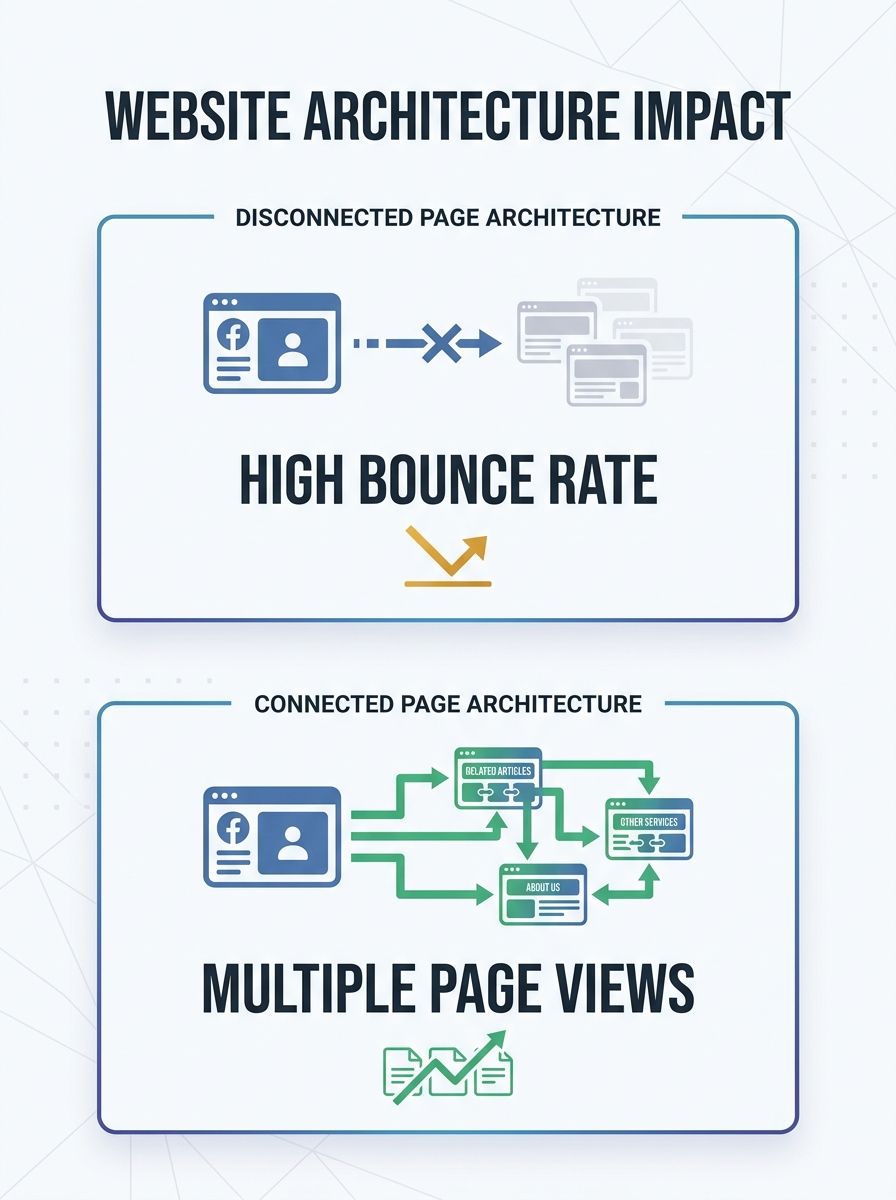
The practical implication for social media managers: every page you promote through social channels needs an architecture audit before you spend a dollar promoting it. Check its click depth from the homepage, count its internal links to related pages, and verify it belongs to a topic cluster. If it fails on any of those three criteria, you're sending paid traffic into a dead end.
The Three-Click Rule Applied to Social Landing Pages
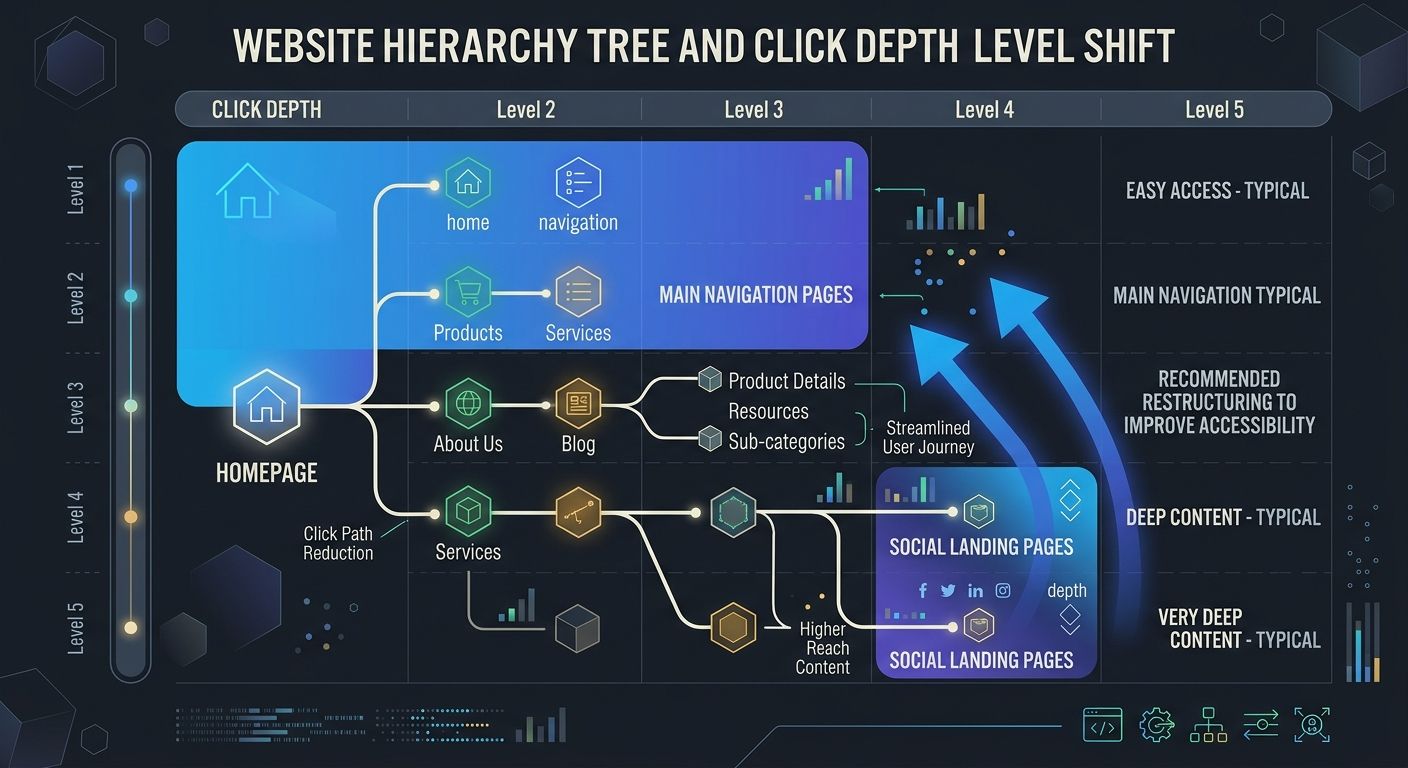
No important page should require more than three clicks from the homepage. Flat architecture—content reachable within two to three clicks—lowers user effort, reduces bounce rates, and improves engagement metrics, according to Semrush's site structure best practices. A flattened structure also allows search engines to reach deep content faster: if a homepage links to 100 pages and those link to 100 more, one million pages become theoretically reachable within three clicks.
Social landing pages violate this rule constantly. Blog posts published months ago drift to click depth five or six as newer content pushes them off category pages. Product pages for seasonal campaigns get buried once the promotion ends. Event recap pages that generated thousands of social shares sit orphaned, their link equity trapped with nowhere to flow.
Audit your top 20 social traffic landing pages (pull this from GA4 by filtering acquisition channel to social). Map each page's click depth from the homepage. Any page receiving more than 500 monthly social visits that sits at depth four or deeper needs to be pulled closer to the surface through navigation updates or internal link additions. We've covered in detail how poor site structure silently kills internal linking, and social landing pages are where that damage shows up first.
Topic Clusters Turn Social Campaigns Into Ranking Assets
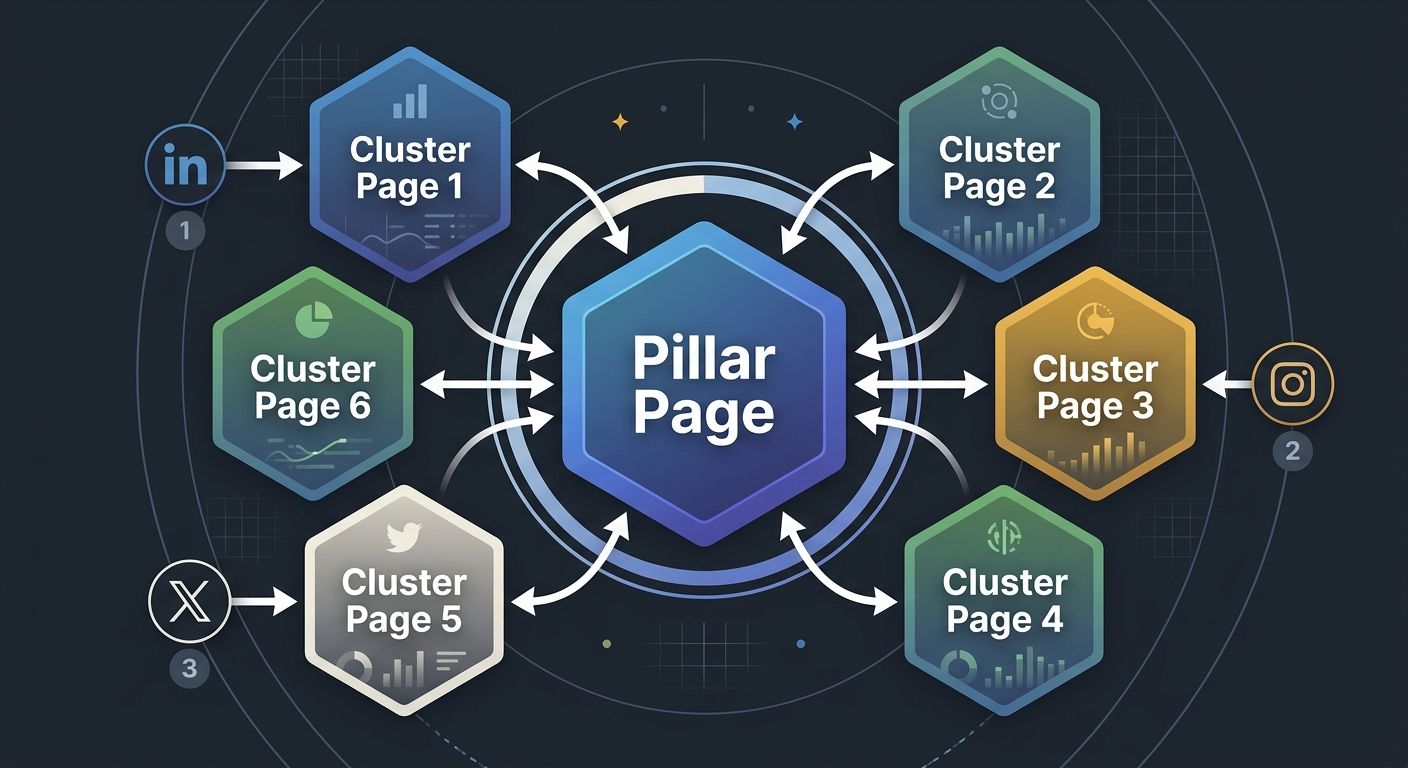
A one-off social media post driving traffic to an isolated blog article produces a traffic spike that decays within two days. The same post driving traffic to a cluster page—one that's internally linked to a pillar page and cross-linked to three to five related subtopics—generates engagement signals that reinforce the entire cluster's authority over weeks and months.
Scalable content planning starts with keyword research, structuring content into topic clusters, and maintaining a process for content refresh and repurposing, as outlined in enterprise SEO architecture research. For social media teams, this means every piece of content created for social promotion should be mapped to a cluster before publication.
Semrush's own blog demonstrates this model well: broad categories like "SEO," "Marketing," and "News & Research" each contain subcategories like "Keyword Research" and "On-Page SEO." Every article belongs to a category and links back to its parent. When any single article gets social traction, the link equity flows upward through the cluster structure. You can see exactly how to structure pages so Google understands your topic clusters using this same model.
The Social-to-SEO Architecture Mapping Framework
I've used a three-component framework for clients running high-volume social campaigns that need to feed SEO performance. I call it Cluster-Link-Sequence:
Cluster assignment: Before publishing any content intended for social promotion, assign it to an existing topic cluster. If it doesn't fit one, create a new cluster with a pillar page first, or don't publish the content at all. Unassigned content creates architectural debt.
Bidirectional linking: The new page links to its pillar page and at least two sibling cluster pages. Those sibling pages link back. Minimum three internal links per page, per Semrush's internal linking guidance.
Social promotion sequencing: Promote cluster pages in sequence over two to three weeks rather than promoting isolated pages randomly. This creates a wave of traffic across the cluster, sending Google consistent engagement signals for the entire topic rather than a single page.
Internal Links From Social Entry Points Distribute Authority
Backlinks from social media platforms are nofollow. Facebook, LinkedIn, Twitter/X, Instagram—none pass traditional link equity directly. But the pages that receive high social traffic tend to earn organic backlinks over time as other sites discover and reference them. Internal linking allows you to share that earned authority with other pages on your site, as Siteimprove's research documents.
This creates a specific architectural opportunity. Your most-shared social content becomes an authority funnel: social traffic arrives, some percentage of visitors bookmark or link to the page from their own sites, and your internal links route that accumulating authority toward your highest-priority ranking targets.
I run this analysis quarterly for clients. Pull your top 10 pages by social traffic from GA4. Cross-reference with Ahrefs or Semrush to see how many referring domains each has earned. Then check where those pages' internal links point. In eight out of ten audits I've done, the highest-authority social landing pages link only to navigation menus and footer links—generic sitewide links that dilute equity across hundreds of pages. Adding three to five contextual internal links from those pages to priority ranking targets produces measurable ranking improvements within 60 days.
For a deeper walkthrough, our guide on mapping how authority flows through your architecture covers the full audit process.
URL Structure Affects Social Sharing Behavior
Clean, readable URLs get shared more on social media. A URL like yoursite.com/marketing/social-media-analytics tells the reader what they'll find before they click. A URL like yoursite.com/p?id=4827&cat=3&ref=social tells them nothing and reduces click-through rates before the page even loads.
Use hierarchical URL paths that mirror your site's category structure: domain.com/category/subcategory/page. The subfolders-versus-subdomains debate has largely settled in favor of subfolders (domain.com/blog/ over blog.domain.com) because subfolders consolidate domain authority and keep link equity within the same site boundary.
Formatting rules that affect both SEO and social sharing: lowercase letters only, hyphens between words rather than underscores, no unnecessary parameters or session IDs. When someone pastes your URL into a LinkedIn post, the URL itself becomes part of your content's first impression. Backlinko's research indicates that updating existing content can deliver a 70.43% organic traffic boost, and part of that update process should include cleaning up legacy URL structures that hurt both ranking and shareability.
Technical Signals Social Teams Overlook
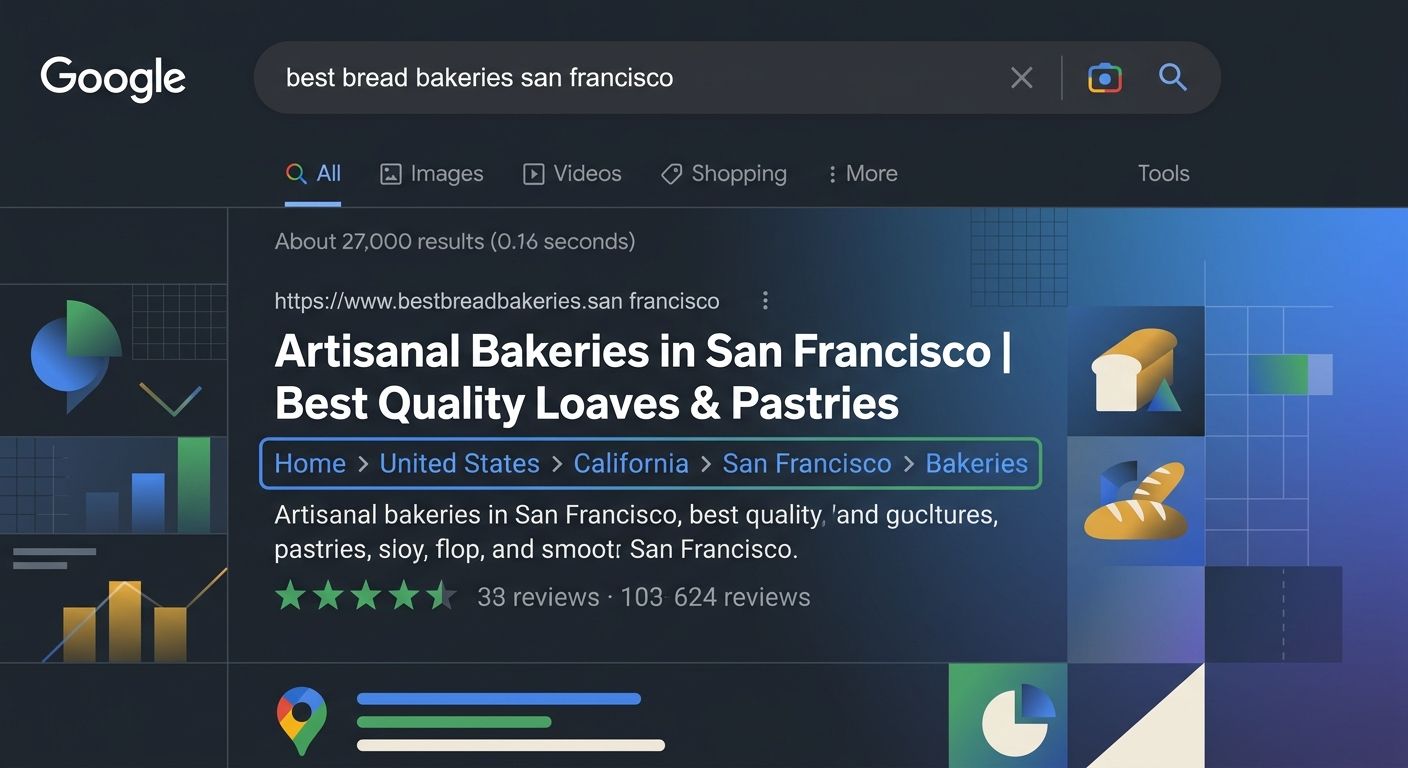
Search engines identify hierarchical site structure through five primary signals: internal linking, URL structure, breadcrumbs schema, SiteNavigationElement schema, and XML sitemap configuration, according to DiagnoSEO's analysis of hierarchy detection. Pages with structured data see 20–40% higher click-through rates in search results.
BreadcrumbList schema tells search engines exactly where a page sits in your hierarchy. SiteNavigationElement schema maps your navigation structure explicitly. Both generate rich snippets in search results that improve CTR—and those improved organic results compound the visibility your social campaigns initiated.
Social media teams rarely coordinate with technical SEO teams on schema implementation. When you're planning a major social campaign around a content hub, verify that every page in the hub has BreadcrumbList markup, proper canonical tags, and XML sitemap inclusion. The XML sitemap strategy for signaling topic authority can reinforce the same cluster structure your social campaigns promote.
The Unresolved Tension Between Social Speed and Architectural Discipline
The hardest part of aligning social media strategy with site architecture is speed. Social media teams need to publish fast, responding to trends, cultural moments, and breaking news. Architecture demands planning: cluster assignment, internal link mapping, URL hierarchy decisions. These two rhythms conflict constantly.
Enterprise-scale architecture (sites with 10,000+ pages) requires governance frameworks where consistent application of canonical tags, parameter handling, and cluster assignment happens systematically. Scalable SEO architecture combines automation, taxonomy, and technical governance to ensure every new page contributes to organic visibility rather than harming it.
The sites that solve this tension build architectural templates into their CMS. When a social media manager creates a new blog post, the CMS enforces cluster assignment, auto-generates breadcrumbs, suggests internal links to related content, and validates URL structure before publication. Architecture becomes invisible infrastructure rather than a bottleneck.
With AI Overviews now triggering on nearly half of Google searches and 97% of AI Overview citations coming from pages already ranking in the top 20, the intersection of social media traffic, site architecture, and AI search visibility is becoming a three-variable problem that no single team can solve independently. Whether AI-driven content tools will eventually automate the architectural layer remains an open question. For now, the marketing organizations that build cross-functional workflows between social, content, and technical SEO will hold the structural advantage—and in site architecture, structure is the whole game.

Alex Chen
Alex Chen is a digital marketing strategist with over 8 years of experience helping enterprise brands and agencies scale their online presence through data-driven campaigns. He has led marketing teams at two successful SaaS startups and specializes in conversion optimization and multi-channel attribution modeling. Alex combines technical expertise with strategic thinking to deliver actionable insights for marketing professionals looking to improve their ROI.
Related Articles

Site Architecture for SEO: How to Structure Your Website for Maximum Rankings
PageRank flows downhill through your site's link graph, losing equity at every click away from the homepage.

The Site Architecture Crawl Budget Audit: Reclaiming Lost SEO Performance Through Strategic Hierarchy Redesign
Social media campaign infrastructure is the single largest unaudited source of crawl waste on enterprise websites, and the teams creating the problem rarely know it exists.

The Link Equity Flow Audit: Mapping How Authority Moves Through Your Site Architecture
The top 10% of pages on a typical enterprise site absorb more than 80% of all internal links, according to Digital Strategy Force's 2026 audit data, leaving the remaining pages starved of the authority they need to rank.
Explore more topics